
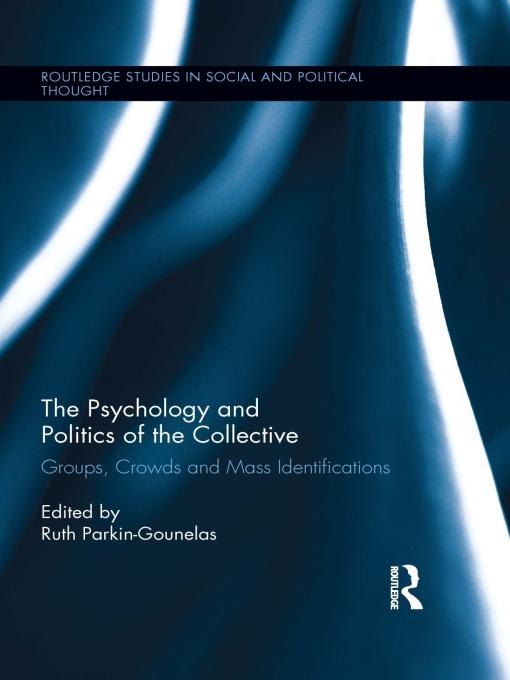
What are the psychological factors in operation when we form groups or crowds, and how are these affected by socio-historical circumstances? History offers endless examples of different forms of human collectivity, both private and public, small-scale and large: from the primal horde to the modern nuclear family, from the Athenian polis to virtual internet communities. Within the context of shifting social bonds in global culture, this book brings together debates on the left from political philosophy, psychoanalysis, social psychology and media and cultural studies to explore the logic of the formation of collective identities from a new theoretical perspective. Challenging liberal-capitalist models of individualism, as well as postmodern identity politics, analysts here turn to Continental philosophy (Lacan, Derrida, Agamben, Laclau, Badiou, among others) in order to re-think collectivity in relation to questions of agency, alterity, affect, sovereignty, the national imaginary and the biopolitical. In the aftermath of the great mass movements of the twentieth century (Marxist-Leninism, Mao), which resulted in bureaucratic submission and the cult of the State, the fate of our collective identity today raises urgent questions about the future of collaborative activity, the role of mediating institutions in shaping mass psychology, what is at stake in a radical democracy, and what happens in a crowd.
Betal nemt med kort, Klarna, Apple Pay eller Google Pay. Ikke tilfreds? Du har altid 14 dages fortrydelsesret. Læs mere i vores vilkår. Har du spørgsmål, så send os en mail på hello@memmo.org.
Memmo gør det nemmere at studere – uanset hvor du er i verden. Hos os samler du dine kursusbøger og smarte studieværktøjer ét sted: resuméer, quizzer, podcasts og flashcards. Og så er der Ted, din studieven, der svarer på alt, du undrer dig over. Over 50 000 studerende studerer allerede her – bygget til at hjælpe dig med at lære hurtigere og stresse mindre.