
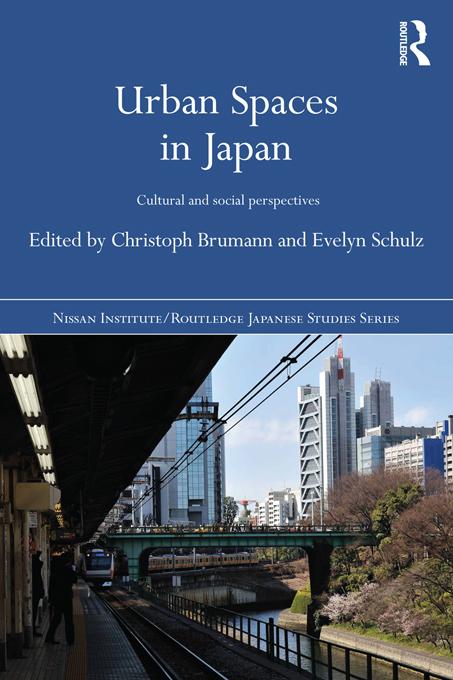
Urban Spaces in Japan explores the workings of power, money and the public interest in the planning and design of Japanese space. Through a set of vivid case studies of well-known Japanese cities including Tokyo, Kobe, and Kyoto, this book examines the potential of civil society in contemporary planning debates. Further, it addresses the implications of Japan's biggest social problem – the demographic decline – for Japanese cities, and demonstrates the serious challenges and exciting possibilities that result from the impending end of Japan's urban growth.
Presenting a synthetic approach that reflects both the physical aspects and the social significance of urban spaces, this book scrutinizes the precise patterns of urban expansion and shrinkage. In doing so, it also summarizes current theories of public space, urban space, and the body in space which are relevant to both Japan and the wider international debate.
With detailed case studies and more general reflections from a broad range of disciplines, this collection of essays demonstrates the value of cross-disciplinary cooperation. As such, it is of interest to students and scholars of geography and urban planning as well as history, anthropology and cultural studies.
Betal nemt med kort, Klarna, Apple Pay eller Google Pay. Ikke tilfreds? Du har altid 14 dages fortrydelsesret. Læs mere i vores vilkår. Har du spørgsmål, så send os en mail på hello@memmo.org.
Memmo gør det nemmere at studere – uanset hvor du er i verden. Hos os samler du dine kursusbøger og smarte studieværktøjer ét sted: resuméer, quizzer, podcasts og flashcards. Og så er der Ted, din studieven, der svarer på alt, du undrer dig over. Over 50 000 studerende studerer allerede her – bygget til at hjælpe dig med at lære hurtigere og stresse mindre.