
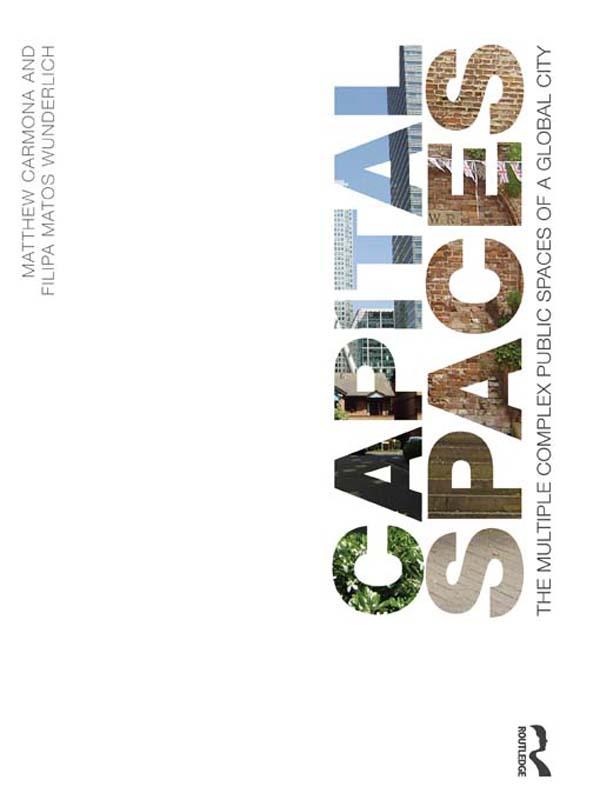
In recent years it has become common-place to hear claims that public space in cities across the globe has become the exclusive preserve of the wealthy and privileged, at the expense of the needs of wider society. Whether it is the privatization of public space through commerical developments like shopping malls and business parks, the gentrification of existing spaces by campaigns against perceived anti-social behaviour or the increasing domination of public areas by private transport in the form of the car, the urban public space is seen as under threat.
But are things really that bad? Has the market really become the sole factor that influences the treatment of public space? Have the financial and personal interests of the few really come to dominate those of the many?
To answer these questions Matthew Carmona and Filipa Wunderlich have carried out a detailed investigation of the modern public spaces of London, that most global of cities. They have developed a new typology of public spaces applicable to all cities, a typology that demonstrates that to properly assess contemporary urban places means challenging the over-simplification of current critiques. Global cities are made up of many overlapping public spaces, good and bad; this book shows how to analyze this complexity, and to understand it.
Betal nemt med kort, Klarna, Apple Pay eller Google Pay. Ikke tilfreds? Du har altid 14 dages fortrydelsesret. Læs mere i vores vilkår. Har du spørgsmål, så send os en mail på hello@memmo.org.
Memmo gør det nemmere at studere – uanset hvor du er i verden. Hos os samler du dine kursusbøger og smarte studieværktøjer ét sted: resuméer, quizzer, podcasts og flashcards. Og så er der Ted, din studieven, der svarer på alt, du undrer dig over. Over 50 000 studerende studerer allerede her – bygget til at hjælpe dig med at lære hurtigere og stresse mindre.