
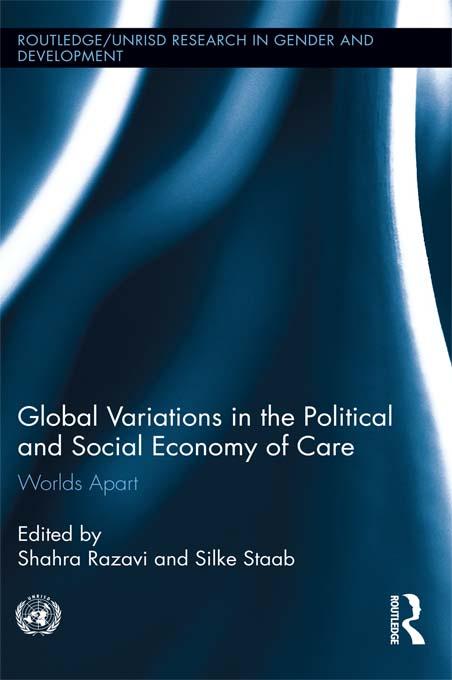
Care work, both paid and unpaid, contributes to well-being, social development and economic growth. But the costs of providing care are unequally borne across gender and social class. Feminist scholarship on the gendered construction of welfare provisioning and welfare regimes has produced a conceptually strong and empirically grounded analysis of care, reinforcing the necessity of rethinking the distinctions between "the public" and "the private" as well as the links between them. Yet this analysis, premised on post-industrial contexts, does not travel easily to other parts of the world. Many of its core assumptions – about family structures, labor markets, state capacities, and public social provisioning – do not hold for a wider range of countries. Drawing on original research on the care economy in three developing regions (Africa, Asia, Latin America), this volume addresses a major empirical lacuna while facilitating a conversation across the North-South divide.
Betal nemt med kort, Klarna, Apple Pay eller Google Pay. Ikke tilfreds? Du har altid 14 dages fortrydelsesret. Læs mere i vores vilkår. Har du spørgsmål, så send os en mail på hello@memmo.org.
Memmo gør det nemmere at studere – uanset hvor du er i verden. Hos os samler du dine kursusbøger og smarte studieværktøjer ét sted: resuméer, quizzer, podcasts og flashcards. Og så er der Ted, din studieven, der svarer på alt, du undrer dig over. Over 50 000 studerende studerer allerede her – bygget til at hjælpe dig med at lære hurtigere og stresse mindre.