
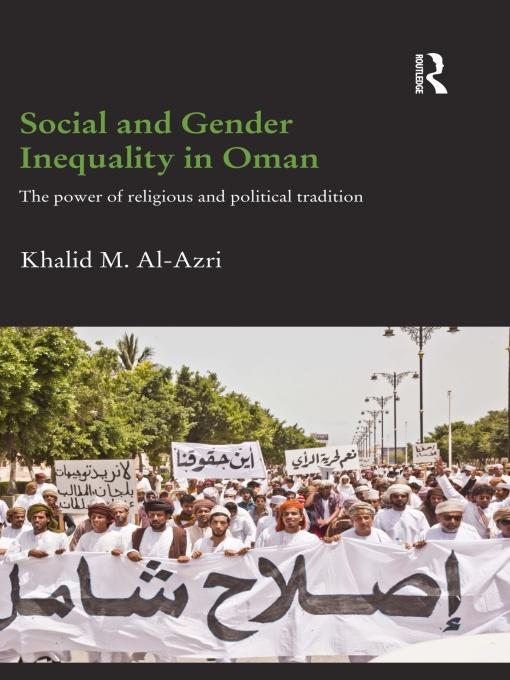
Looking at the social, political and legal changes in Oman since 1970, this book challenges the Islamic and tribal traditional cultural norms relating to marriage, divorce and women’s rights which guide social and legal practice in the modern Omani state. The book argues that despite the establishment of legal instruments guaranteeing equality for all citizens, the fact that the state depends upon Islamic and tribal elites for its legitimacy invalidates these guarantees in practice. Two particular features of the legal and cultural regulation of marriage and marital rights are focused on - the perceived requirement for kafa’a or equality in marriage between so called high and low socio-economic status peoples is examined, and the institution of talaq, which grants greater rights to men than to women in appeals for divorce. This book addresses highly complex subjects with great rigor, in terms of empirical research and engagement with theory, sociological and political as well as theological and legal. It is an interesting investigation of the divisions of authority between the state, Islam and tribal norms, highlighting barriers to reform in both Oman and wider Islamic society, and advocating the removal of such obstacles.
Betal nemt med kort, Klarna, Apple Pay eller Google Pay. Ikke tilfreds? Du har altid 14 dages fortrydelsesret. Læs mere i vores vilkår. Har du spørgsmål, så send os en mail på hello@memmo.org.
Memmo gør det nemmere at studere – uanset hvor du er i verden. Hos os samler du dine kursusbøger og smarte studieværktøjer ét sted: resuméer, quizzer, podcasts og flashcards. Og så er der Ted, din studieven, der svarer på alt, du undrer dig over. Over 50 000 studerende studerer allerede her – bygget til at hjælpe dig med at lære hurtigere og stresse mindre.