
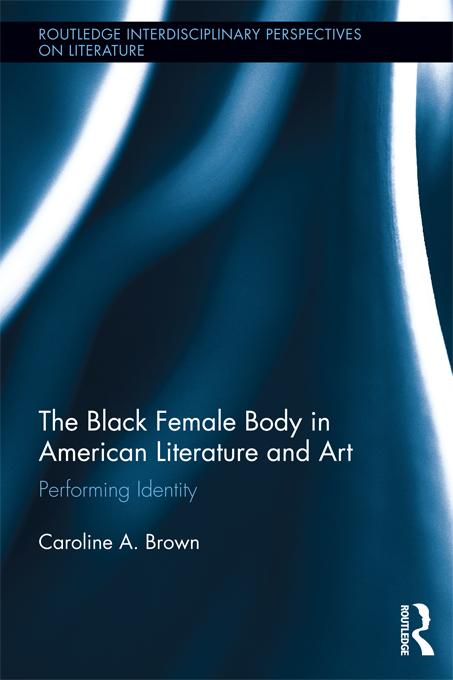
This book examines how African-American writers and visual artists interweave icon and inscription in order to re-present the black female body, traditionally rendered alien and inarticulate within Western discursive and visual systems. Brown considers how the writings of Toni Morrison, Gayl Jones, Paule Marshall, Edwidge Danticat, Jamaica Kincaid, Andrea Lee, Gloria Naylor, and Martha Southgate are bound to such contemporary, postmodern visual artists as Lorna Simpson, Carrie Mae Weems, Kara Walker, Betye Saar, and Faith Ringgold. While the artists and authors rely on radically different media—photos, collage, video, and assembled objects, as opposed to words and rhythm—both sets of intellectual activists insist on the primacy of the black aesthetic. Both assert artistic agency and cultural continuity in the face of the oppression, social transformation, and cultural multiplicity of the late twentieth and early twenty-first centuries. This book examines how African-American performative practices mediate the tension between the ostensibly de-racialized body politic and the hyper-racialized black, female body, reimagining the cultural and political ground that guides various articulations of American national belonging. Brown shows how and why black women writers and artists matter as agents of change, how and why the form and content of their works must be recognized and reconsidered in the increasingly frenzied arena of cultural production and political debate.
Betal nemt med kort, Klarna, Apple Pay eller Google Pay. Ikke tilfreds? Du har altid 14 dages fortrydelsesret. Læs mere i vores vilkår. Har du spørgsmål, så send os en mail på hello@memmo.org.
Memmo gør det nemmere at studere – uanset hvor du er i verden. Hos os samler du dine kursusbøger og smarte studieværktøjer ét sted: resuméer, quizzer, podcasts og flashcards. Og så er der Ted, din studieven, der svarer på alt, du undrer dig over. Over 50 000 studerende studerer allerede her – bygget til at hjælpe dig med at lære hurtigere og stresse mindre.