
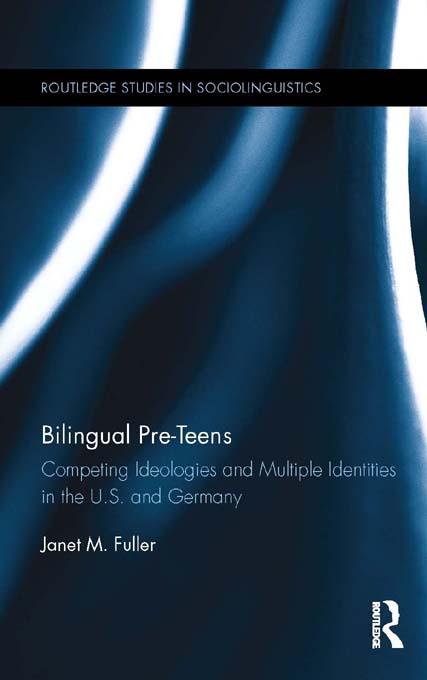
This volume examines the connection between socio-economic class and bilingual practices, a previously under-researched area, through looking at differences in bilingual settings that are classified as "immigrant" or "elite" and are thus linked to socio-economic class categories. Fuller chooses for this examination bilingual pre-teen children in Germany and the U.S. in order to demonstrate how local identities are embedded in a wider social world and how ideologies and identities both produce and reproduce each other. In so doing, she argues that while pre-teen children are clearly influenced by macro-level ideologies, they also have agency in how they choose to construct their identities with relation to hegemonic societal discourses, and have many other motivations and identities aside from social class membership which shape their linguistic practices.
Betal nemt med kort, Klarna, Apple Pay eller Google Pay. Ikke tilfreds? Du har altid 14 dages fortrydelsesret. Læs mere i vores vilkår. Har du spørgsmål, så send os en mail på hello@memmo.org.
Memmo gør det nemmere at studere – uanset hvor du er i verden. Hos os samler du dine kursusbøger og smarte studieværktøjer ét sted: resuméer, quizzer, podcasts og flashcards. Og så er der Ted, din studieven, der svarer på alt, du undrer dig over. Over 50 000 studerende studerer allerede her – bygget til at hjælpe dig med at lære hurtigere og stresse mindre.