
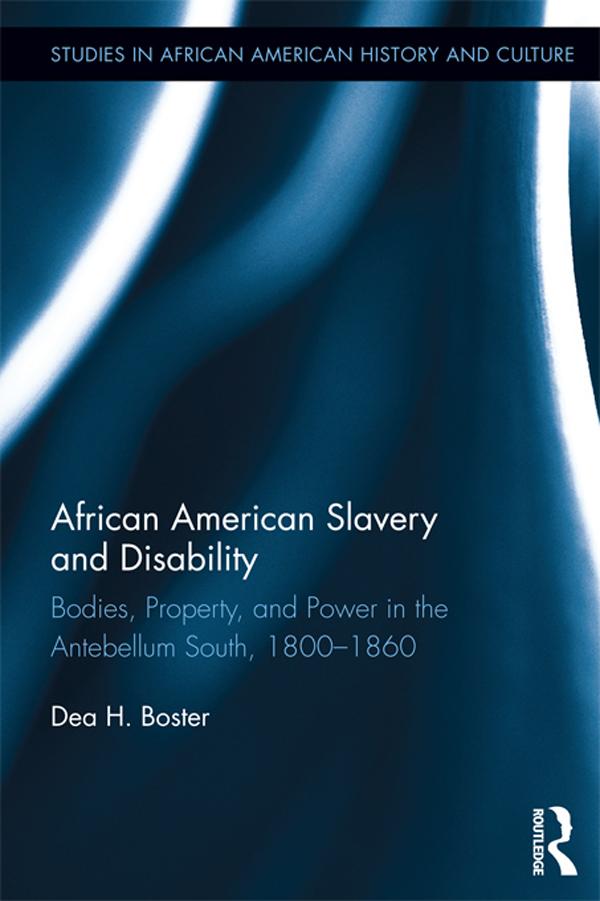
Disability is often mentioned in discussions of slave health, mistreatment and abuse, but constructs of how "able" and "disabled" bodies influenced the institution of slavery has gone largely overlooked. This volume uncovers a history of disability in African American slavery from the primary record, analyzing how concepts of race, disability, and power converged in the United States in the first half of the nineteenth century.
Slaves with physical and mental impairments often faced unique limitations and conditions in their diagnosis, treatment, and evaluation as property. Slaves with disabilities proved a significant challenge to white authority figures, torn between the desire to categorize them as different or defective and the practical need to incorporate their "disorderly" bodies into daily life. Being physically "unfit" could sometimes allow slaves to escape the limitations of bondage and oppression, and establish a measure of self-control. Furthermore, ideas about and reactions to disability—appearing as social construction, legal definition, medical phenomenon, metaphor, or masquerade—highlighted deep struggles over bodies in bondage in antebellum America.
Betal nemt med kort, Klarna, Apple Pay eller Google Pay. Ikke tilfreds? Du har altid 14 dages fortrydelsesret. Læs mere i vores vilkår. Har du spørgsmål, så send os en mail på hello@memmo.org.
Memmo gør det nemmere at studere – uanset hvor du er i verden. Hos os samler du dine kursusbøger og smarte studieværktøjer ét sted: resuméer, quizzer, podcasts og flashcards. Og så er der Ted, din studieven, der svarer på alt, du undrer dig over. Over 50 000 studerende studerer allerede her – bygget til at hjælpe dig med at lære hurtigere og stresse mindre.