
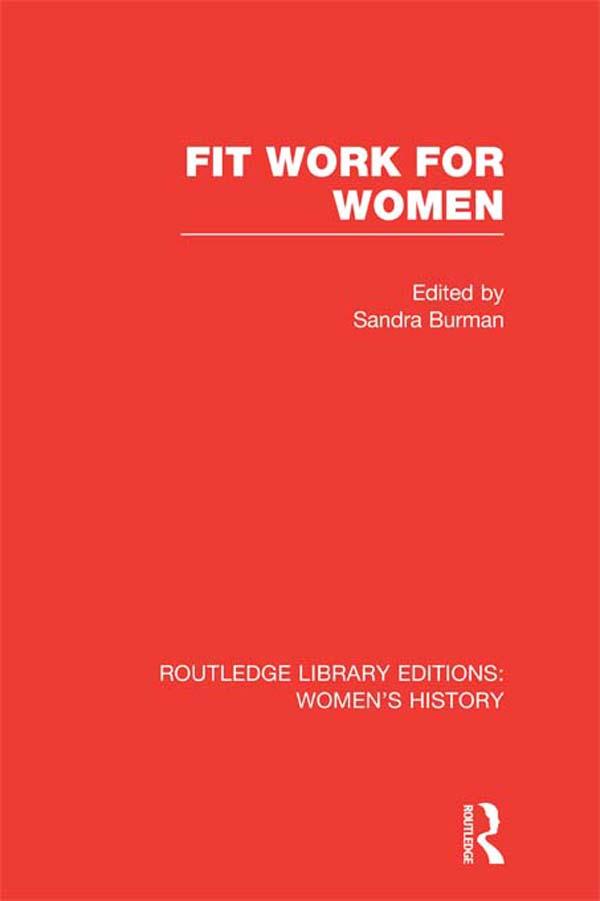
This book presents a collection of papers which discuss the origins of the domestic ideal and its effects on activities usually undertaken by women: not only on women’s wage work, but also on activities either not defined as work or accorded an ambiguous status. It discusses the formation of the ideology of domesticity, philanthropy and its effects on official policy and on women, landladies in the nineteenth and twentieth centuries, working-class radical suffragists, and Labour Party and trade union attitudes to feminists.
Modern society of 1979, when the book was first published, is analysed in a discussion of militancy and acquiescence among women wage workers, a look at how and why the legal system reinforces activity specialisation according to gender, and an examination of why both pre-pre-war capitalism and the modern Welfare State have been unable to meet the needs of dependents. This collection reflects the increasing recognition that in order to understand women’s roles today, it is necessary to examine not only their current manifestations, but also their origins and early development.
Betal nemt med kort, Klarna, Apple Pay eller Google Pay. Ikke tilfreds? Du har altid 14 dages fortrydelsesret. Læs mere i vores vilkår. Har du spørgsmål, så send os en mail på hello@memmo.org.
Memmo gør det nemmere at studere – uanset hvor du er i verden. Hos os samler du dine kursusbøger og smarte studieværktøjer ét sted: resuméer, quizzer, podcasts og flashcards. Og så er der Ted, din studieven, der svarer på alt, du undrer dig over. Over 50 000 studerende studerer allerede her – bygget til at hjælpe dig med at lære hurtigere og stresse mindre.