
The Nazi’s were implacably opposed to feminism and women’s independence. Rosa Luxemburg became a symbol of all that most horrified them in German society, in particular because of her involvement in active politics. Nazi ideology saw women in the activist role of 'wives, mothers and home-makers', and their task was to support their fighting menfolk by providing food and making and mending uniforms and flags.
The miscellany of women’s organisations was dissolved and reunified by Gregor Strasser in 1931, and in 1934 Gertrud Scholtz-Klink became an overall leader of the Nazi Women’s Group, after which it functioned primarily as a propaganda channel. Part of the policy of Gleichschaltung (co-ordination) meant that even to join a sewing group, women had to choose the party group or nothing.
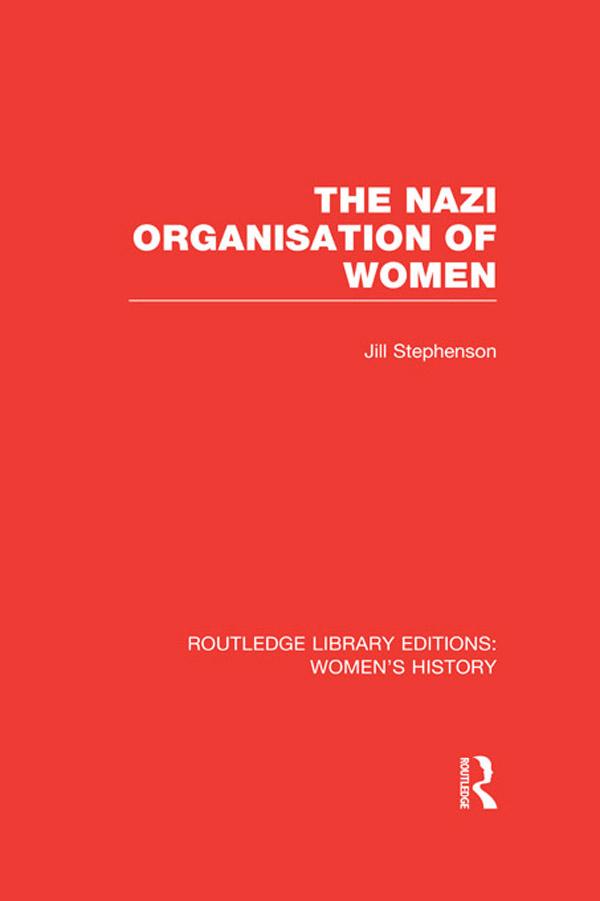
This book provides a detailed and fascinating picture of the origins, development and functions of the specifically women’s organisations associated with the NSDAP from their beginnings in the early 1920s, until their demise in 1945. It traces the history of the Nazi Women’s Group, the sources of its members and analyses their ambitions and hopes from the Frauenwerk. Its purpose is above all to make an important contribution to the study of National Socialism as a movement which attracted and held the enthusiasm of a small minority of Germans who, given the chance from 1933, attempted to impose their will on the majority.
Betal nemt med kort, Klarna, Apple Pay eller Google Pay. Ikke tilfreds? Du har altid 14 dages fortrydelsesret. Læs mere i vores vilkår. Har du spørgsmål, så send os en mail på hello@memmo.org.
Memmo gør det nemmere at studere – uanset hvor du er i verden. Hos os samler du dine kursusbøger og smarte studieværktøjer ét sted: resuméer, quizzer, podcasts og flashcards. Og så er der Ted, din studieven, der svarer på alt, du undrer dig over. Over 50 000 studerende studerer allerede her – bygget til at hjælpe dig med at lære hurtigere og stresse mindre.