
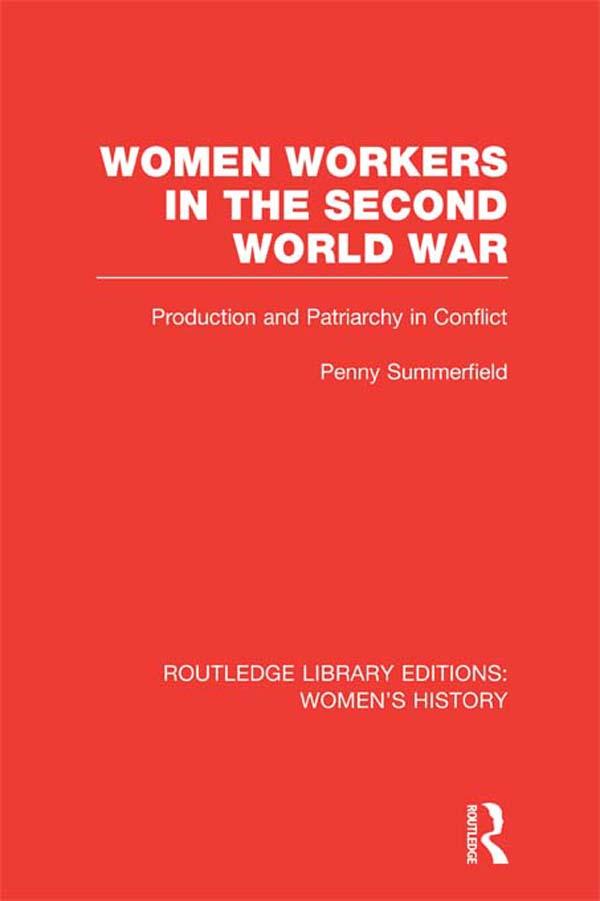
The Second World War is often seen as a period of emancipation, because of the influx of women into paid work, and because the state took steps to relieve women of domestic work.
This study challenges such a picture. The state approached the removal of women from the domestic sphere with extreme caution, in spite of the desperate need for women’s labour in war work. Women’s own preferences were frequently neglected or distorted in the search for a compromise between production and patriarchy. However, the enduring practices of paying women less and treating them as an inferior category of workers led to growth in the numbers and proportions of women employed after the war in many areas of work.
Penny Summerfield concludes that the war accelerated the segregation of women in 'inferior' sectors of work, and inflated the expectation that working women would bear the double burden without a redistribution of responsibility for the domestic sphere between men, women and the state.
First published in 1984, this is an important book for students of history, sociology and women’s studies at all levels.
Betal nemt med kort, Klarna, Apple Pay eller Google Pay. Ikke tilfreds? Du har altid 14 dages fortrydelsesret. Læs mere i vores vilkår. Har du spørgsmål, så send os en mail på hello@memmo.org.
Memmo gør det nemmere at studere – uanset hvor du er i verden. Hos os samler du dine kursusbøger og smarte studieværktøjer ét sted: resuméer, quizzer, podcasts og flashcards. Og så er der Ted, din studieven, der svarer på alt, du undrer dig over. Over 50 000 studerende studerer allerede her – bygget til at hjælpe dig med at lære hurtigere og stresse mindre.