
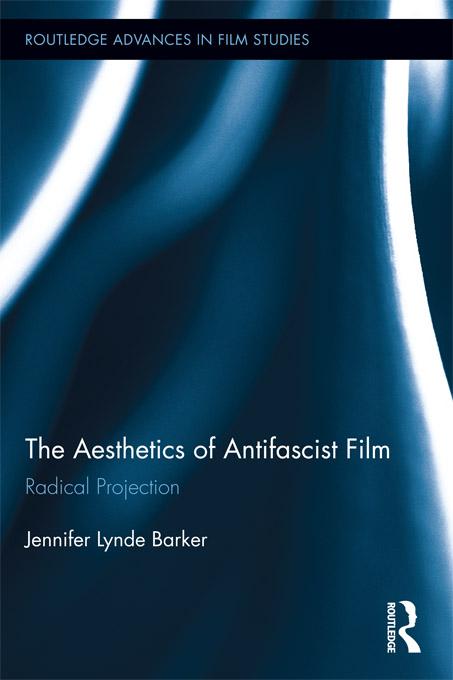
Through a series of detailed film case histories ranging from The Great Dictator to Hiroshima mon amour to The Lives of Others, The Aesthetics of Antifascist Film: Radical Projection explores the genesis and recurrence of antifascist aesthetics as it manifests in the WWII, Cold War and Post-Wall historical periods.
Emerging during a critical moment in film history—1930s/1940s Hollywood— cinematic antifascism was representative of the international nature of antifascist alliances, with the amalgam of film styles generated in émigré Hollywood during the WWII period reflecting a dialogue between an urgent political commitment to antifascism and an equally intense commitment to aesthetic complexity. Opposed to a fascist aesthetics based on homogeneity, purity and spectacle, these antifascist films project a radical beauty of distortion, heterogeneity, fragmentation and loss. By juxtaposing documentation and the modernist techniques of surrealism and expressionism, the filmmakers were able to manifest a non-totalizing work of art that still had political impact.
Drawing on insights from film and cultural studies, aesthetic and ethical philosophy, and socio-political theory, this book argues that the artistic struggles with political commitment and modernist strategies of representation during the 1930s and 40s resulted in a distinctive, radical aesthetic form that represents an alternate strand of post-modernism.
Betal nemt med kort, Klarna, Apple Pay eller Google Pay. Ikke tilfreds? Du har altid 14 dages fortrydelsesret. Læs mere i vores vilkår. Har du spørgsmål, så send os en mail på hello@memmo.org.
Memmo gør det nemmere at studere – uanset hvor du er i verden. Hos os samler du dine kursusbøger og smarte studieværktøjer ét sted: resuméer, quizzer, podcasts og flashcards. Og så er der Ted, din studieven, der svarer på alt, du undrer dig over. Over 50 000 studerende studerer allerede her – bygget til at hjælpe dig med at lære hurtigere og stresse mindre.