
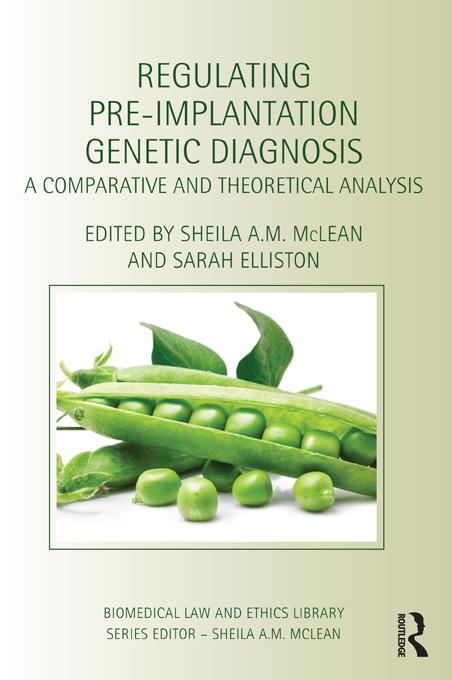
The successful achievement of pregnancies following pre-implantation genetic diagnosis (PGD) was first reported in April 1990. The technology is often used for patients who are at substantial risk of conceiving a pregnancy affected by a known genetic disorder, however from this technology other more controversial uses have arisen such as HLA typing to save the life of a sibling, gender selection for social reasons, the prevention of late onset diseases, or the prevention of diseases which may be genetically predisposed to developing such as breast cancer. The technology surrounding PGD is constantly developing, giving rise to new and unexpected consequences that create fresh ethical and legal dilemmas.
Featuring internationally recognized experts in the field, this book critically explores the regulation of PGD and the broader legal and ethical issues associated with it. It looks at the regulatory situation in a number of jurisdictions including New Zealand, Australia and the United Kingdom, but it also explores a number of themes of wide significance including a historical consideration of PGD and its part in the creation of the "genetic embryo" as a political tool, the over regulation of PGD and the ethical difficulties in handling additional unexpected medical information yielded by new technologies. This book will be of particular interest to academics and students of law, medicine and ethics.
Betal nemt med kort, Klarna, Apple Pay eller Google Pay. Ikke tilfreds? Du har altid 14 dages fortrydelsesret. Læs mere i vores vilkår. Har du spørgsmål, så send os en mail på hello@memmo.org.
Memmo gør det nemmere at studere – uanset hvor du er i verden. Hos os samler du dine kursusbøger og smarte studieværktøjer ét sted: resuméer, quizzer, podcasts og flashcards. Og så er der Ted, din studieven, der svarer på alt, du undrer dig over. Over 50 000 studerende studerer allerede her – bygget til at hjælpe dig med at lære hurtigere og stresse mindre.