
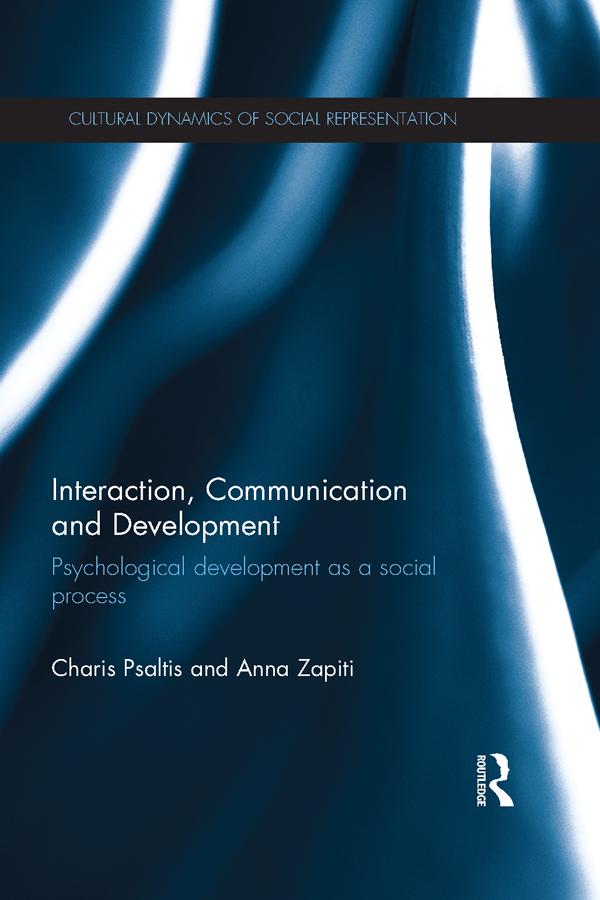
For decades there has been considerable interest in the ways that interactions between children can provide a beneficial context for the study of cognitive and social development. In this book Psaltis and Zapiti use both theoretical and empirical research to build on the perspectives of Piaget, Vygotsky, Moscovici, and others including the legacy of Gerard Duveen, to offer a state of the art account of research on the themes of social interaction and cognitive development.
Interaction Communication and Development discusses the significance of social identities for social interaction and cognitive development. The empirical set of studies presented and discussed focus on patterns of communication between children as they work together to solve problems. Communications are examined in detail with a focus on:
- Socio-cognitive conflict, conversational moves and conversation types
- The way the different forms of the interactions relate to different sources of asymmetry in the classroom
- The way social representations and social identities of gender are negotiated in the interaction
This book provides an important account of how children develop through different kinds of social interactions. It will have considerable appeal for researchers in the fields of developmental psychology, socio-cultural psychology, social representations theory and education who wish to gain a deeper understanding of development and its relation to socio-cultural processes.
Betal nemt med kort, Klarna, Apple Pay eller Google Pay. Ikke tilfreds? Du har altid 14 dages fortrydelsesret. Læs mere i vores vilkår. Har du spørgsmål, så send os en mail på hello@memmo.org.
Memmo gør det nemmere at studere – uanset hvor du er i verden. Hos os samler du dine kursusbøger og smarte studieværktøjer ét sted: resuméer, quizzer, podcasts og flashcards. Og så er der Ted, din studieven, der svarer på alt, du undrer dig over. Over 50 000 studerende studerer allerede her – bygget til at hjælpe dig med at lære hurtigere og stresse mindre.