
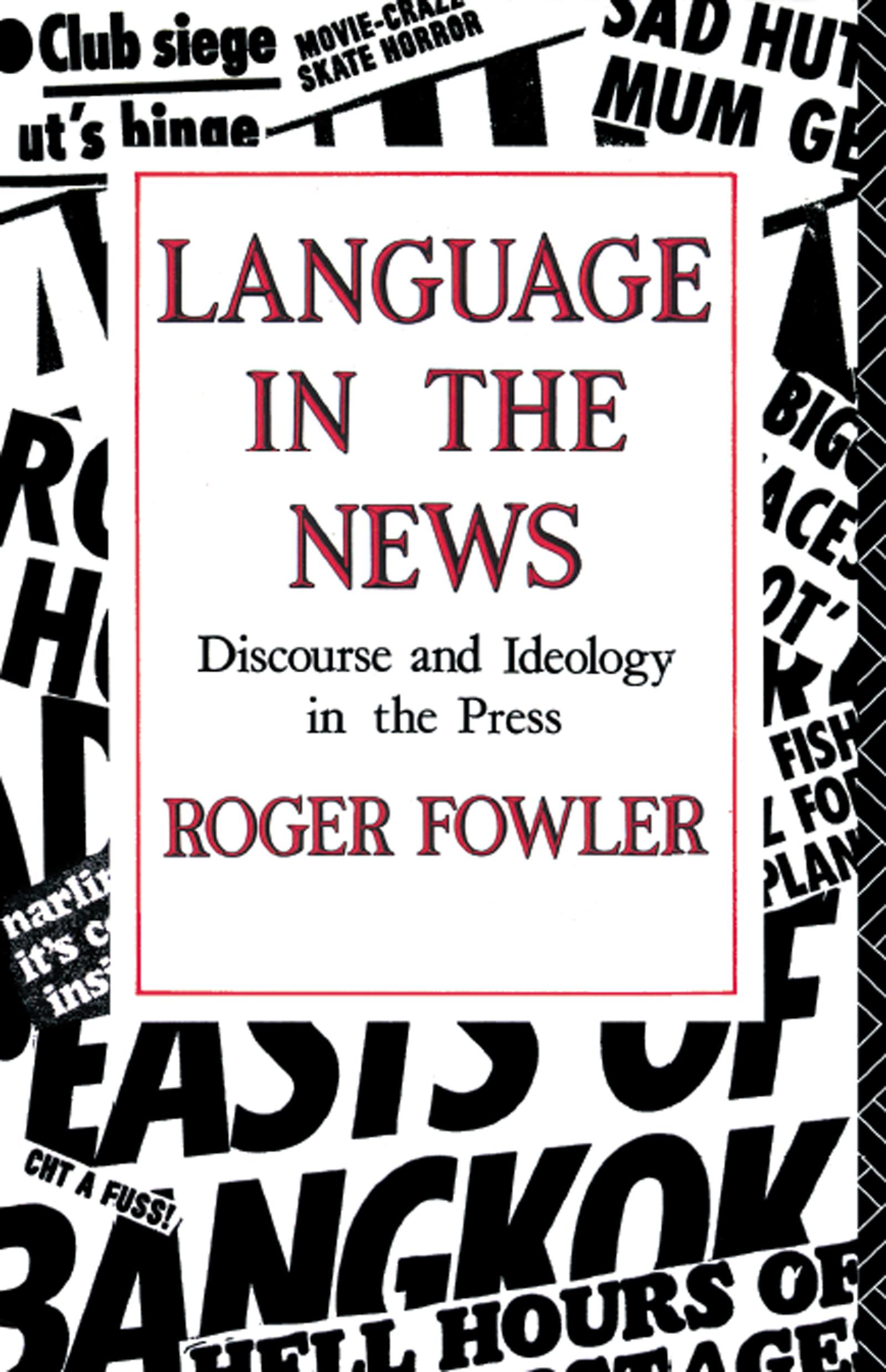
Newspaper coverage of world events is presented as the unbiased recording of `hard facts`. In an incisive study of both the quality and the popular press, Roger Fowler challenges this perception, arguing that news is a practice, a product of the social and political world on which it reports. Writing from the perspective of critical linguistics, Fowler examines the crucial role of language in mediating reality. Starting with a general account of news values and the processes of selection and transformation which go to make up the news, Fowler goes on to consider newspaper representations of gender, power, authority and law and order. He discusses stereotyping, terms of abuse and endearment, the editorial voice and the formation of consensus. Fowler's analysis takes in some of the major news stories of the Thatcher decade - the American bombing of Libya in 1986, the salmonella-in-eggs affair, the problems of the National Health Service and the controversy of youth and contraception.
Betal nemt med kort, Klarna, Apple Pay eller Google Pay. Ikke tilfreds? Du har altid 14 dages fortrydelsesret. Læs mere i vores vilkår. Har du spørgsmål, så send os en mail på hello@memmo.org.
Memmo gør det nemmere at studere – uanset hvor du er i verden. Hos os samler du dine kursusbøger og smarte studieværktøjer ét sted: resuméer, quizzer, podcasts og flashcards. Og så er der Ted, din studieven, der svarer på alt, du undrer dig over. Over 50 000 studerende studerer allerede her – bygget til at hjælpe dig med at lære hurtigere og stresse mindre.
Du kan måske også lide
Køb bogen0