
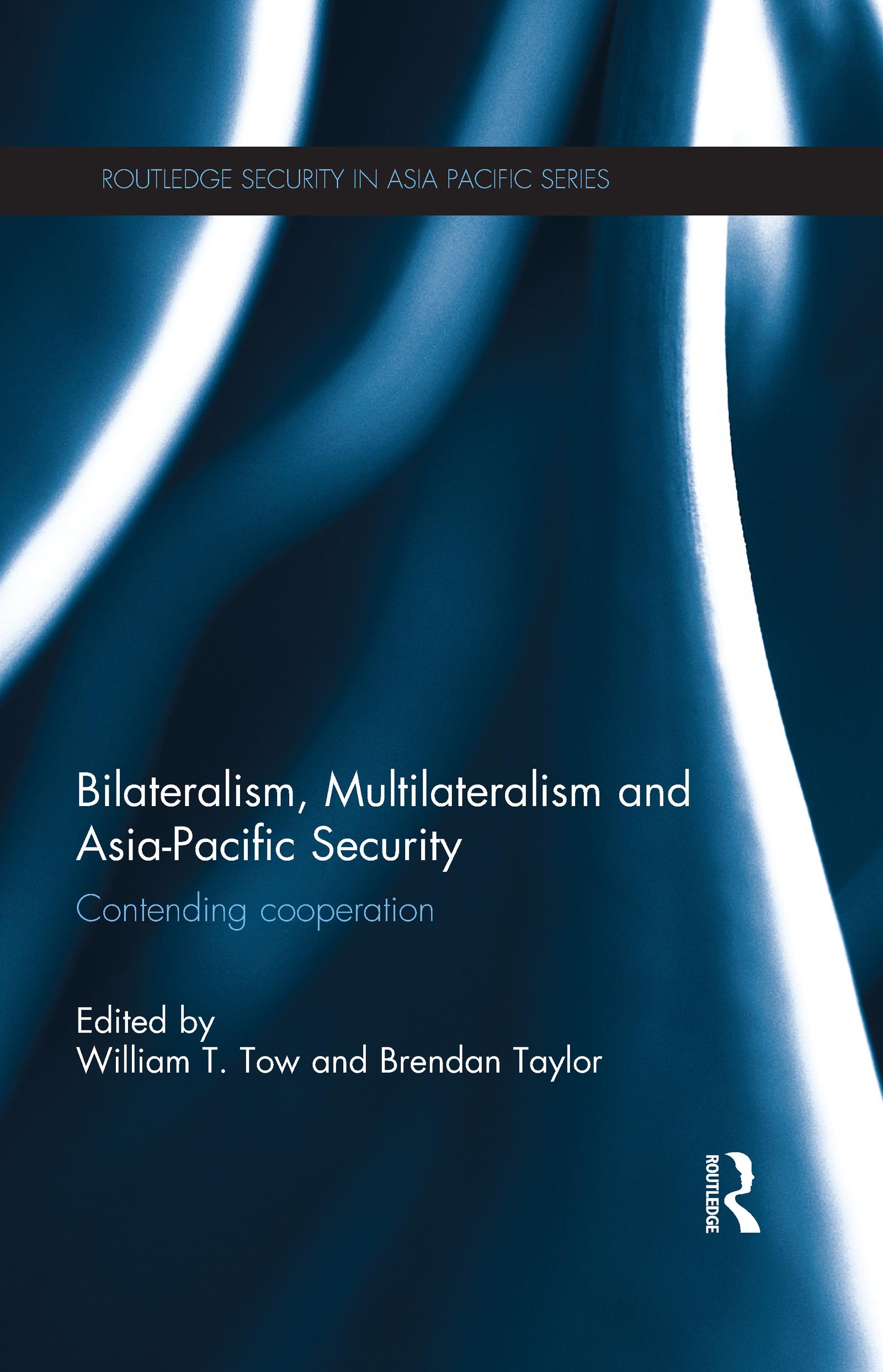
Many scholars of international relations in Asia regard bilateralism and multilateralism as alternative and mutually exclusive approaches to security co-operation. They argue that multilateral associations such as ASEAN will eventually replace the system of bilateral alliances which were the predominant form of U.S. security co-operation with Asia-Pacific allies during the Cold War. Yet these bilateral alliances continue to be the primary means of the United States’ strategic engagement with the region. This book contends that bilateralism and multilateralism are not mutually exclusive, and that bilateralism is likely to continue strong even as multilateralism strengthens. It explores a wide range of issues connected with this question. It discusses how US bilateral alliances have been reinvigorated in recent years, examines how bilateral and multilateral approaches to specific problems can work alongside each other, and concludes by considering how patterns of international security are likely to develop in the region in future.
Betal nemt med kort, Klarna, Apple Pay eller Google Pay. Ikke tilfreds? Du har altid 14 dages fortrydelsesret. Læs mere i vores vilkår. Har du spørgsmål, så send os en mail på hello@memmo.org.
Memmo gør det nemmere at studere – uanset hvor du er i verden. Hos os samler du dine kursusbøger og smarte studieværktøjer ét sted: resuméer, quizzer, podcasts og flashcards. Og så er der Ted, din studieven, der svarer på alt, du undrer dig over. Over 50 000 studerende studerer allerede her – bygget til at hjælpe dig med at lære hurtigere og stresse mindre.