
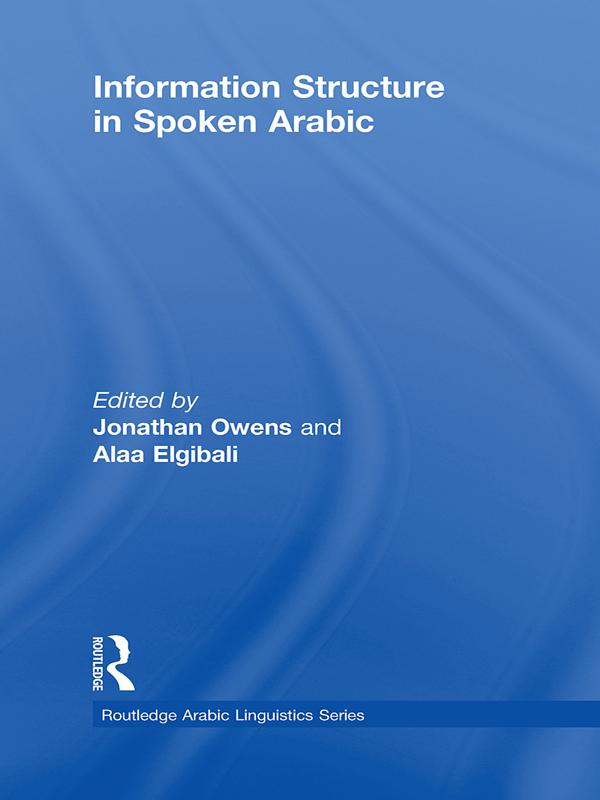
This book explores speakers’ intentions, and the structural and pragmatic resources they employ, in spoken Arabic – which is different in many essential respects from literary Arabic. Based on new empirical findings from across the Arabic world this book elucidates the many ways in which context and the goals and intentions of the speaker inform and constrain linguistic structure in spoken Arabic.
This is the first book to provide an in-depth analysis of information structure in spoken Arabic, which is based on language as it is actually used, not on normatively-given grammar. Written by leading experts in Arabic linguistics, the studies evaluate the ways in which relevant parts of a message in spoken Arabic are encoded, highlighted or obscured. It covers a broad range of issues from across the Arabic-speaking world, including the discourse-sensitive properties of word order variation, the use of intonation for information focussing, the differential role of native Arabic and second languages to encode information in a codeswitching context, and the need for cultural contextualization to understand the role of "disinformation" structure.
The studies combine a strong empirical basis with methodological and theoretical issues drawn from a number of different perspectives including pragmatic theory, language contact, instrumental prosodic analysis and (de-)grammaticalization theory. The introductory chapter embeds the project within the deeper Arabic grammatical tradition, as elaborated by the eleventh century grammarian Abdul Qahir al-Jurjani. This book provides an invaluable comprehensive introduction to an important, yet understudied, component of spoken Arabic.
Betal nemt med kort, Klarna, Apple Pay eller Google Pay. Ikke tilfreds? Du har altid 14 dages fortrydelsesret. Læs mere i vores vilkår. Har du spørgsmål, så send os en mail på hello@memmo.org.
Memmo gør det nemmere at studere – uanset hvor du er i verden. Hos os samler du dine kursusbøger og smarte studieværktøjer ét sted: resuméer, quizzer, podcasts og flashcards. Og så er der Ted, din studieven, der svarer på alt, du undrer dig over. Over 50 000 studerende studerer allerede her – bygget til at hjælpe dig med at lære hurtigere og stresse mindre.