
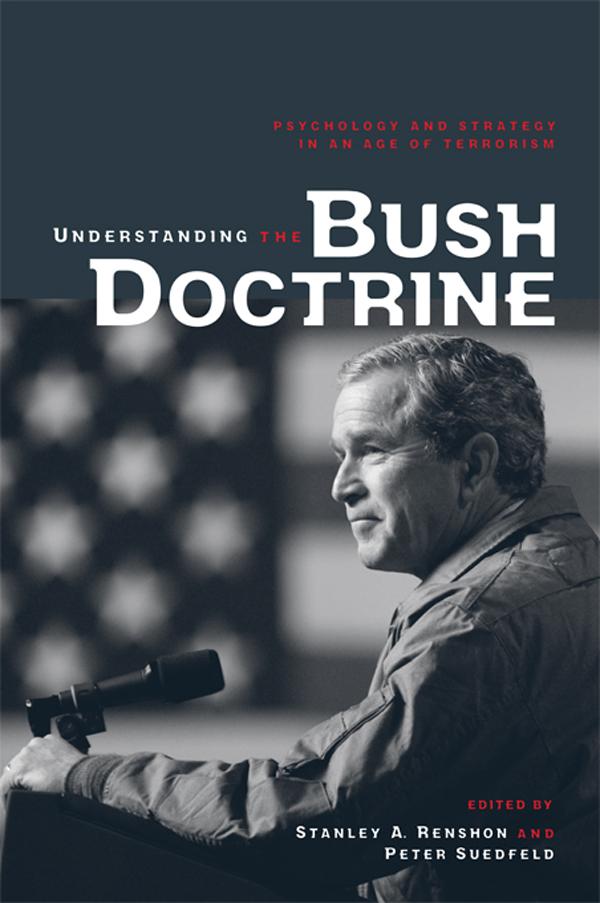
In this volume, leading scholars of U.S. foreign policy, international relations, and political psychology examine one of the most consequential and controversial statements of national security policy in contemporary American history. Unlike other books which focus only on unilateralism or preventive war, Stanley A. Renshon and Peter Suedfeld provide a comprehensive framework with which to analyze the Bush Doctrine by identifying five central and interrelated elements of the doctrine:
- American pre-eminence
- assertive realism
- equivocal alliances
- selective multilateralism
- democratic transformation.
Given its centrality to American national security, and the fact that the effects of it are likely to be felt well into the twenty-first century, Understanding the Bush Doctrine provides a critically balanced and pointed assessment of the Bush Doctrine and its premises, as well as a fair appraisal of its implications and prospects.
Betal nemt med kort, Klarna, Apple Pay eller Google Pay. Ikke tilfreds? Du har altid 14 dages fortrydelsesret. Læs mere i vores vilkår. Har du spørgsmål, så send os en mail på hello@memmo.org.
Memmo gør det nemmere at studere – uanset hvor du er i verden. Hos os samler du dine kursusbøger og smarte studieværktøjer ét sted: resuméer, quizzer, podcasts og flashcards. Og så er der Ted, din studieven, der svarer på alt, du undrer dig over. Over 50 000 studerende studerer allerede her – bygget til at hjælpe dig med at lære hurtigere og stresse mindre.