
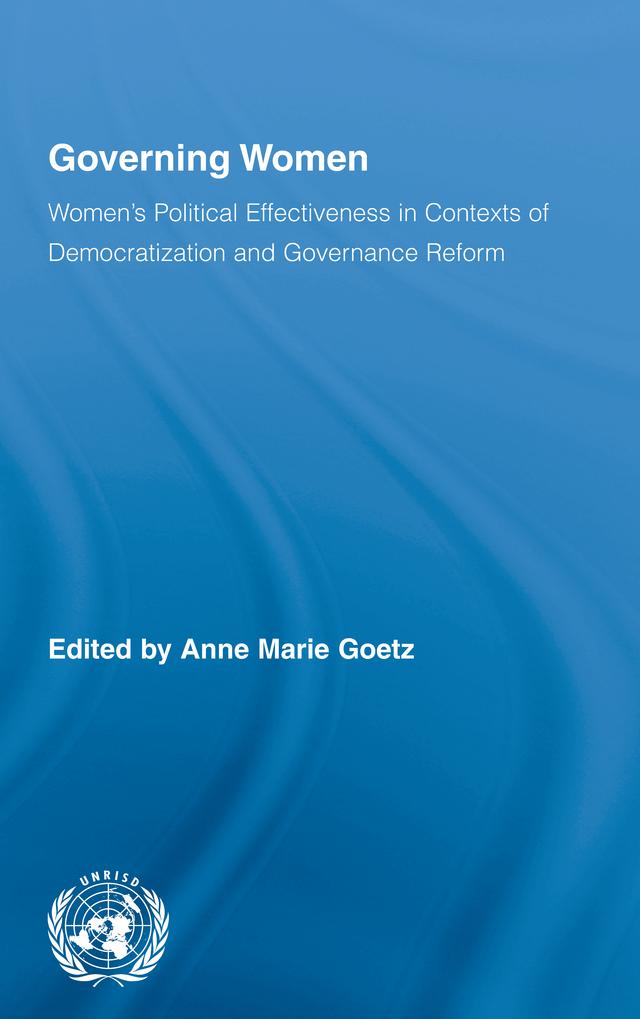
Though the proportion of women in national assemblies still barely scrapes 16% on average, the striking outliers – Rwanda with 49% of its assembly female, Argentina with 35%, Liberia and Chile with new women presidents this year – have raised expectations that there is an upward trend in women’s representation from which we may expect big changes in the quality of governance. But getting women into public office is just the first step in the challenge of creating governance and accountability systems that respond to women’s needs and protect their rights.
Using case studies from around the world, the essays in this volume consider the conditions for effective connections between women in civil society and women in politics, for the evolution of political party platforms responsive to women’s interests, for local government arrangements that enable women to engage effectively, and for accountability mechanisms that answer to women. The book’s argument is that good governance from a gender perspective requires more than more women in politics. It requires fundamental incentive changes to orient public action and policy to support gender equality.
Betal nemt med kort, Klarna, Apple Pay eller Google Pay. Ikke tilfreds? Du har altid 14 dages fortrydelsesret. Læs mere i vores vilkår. Har du spørgsmål, så send os en mail på hello@memmo.org.
Memmo gør det nemmere at studere – uanset hvor du er i verden. Hos os samler du dine kursusbøger og smarte studieværktøjer ét sted: resuméer, quizzer, podcasts og flashcards. Og så er der Ted, din studieven, der svarer på alt, du undrer dig over. Over 50 000 studerende studerer allerede her – bygget til at hjælpe dig med at lære hurtigere og stresse mindre.