
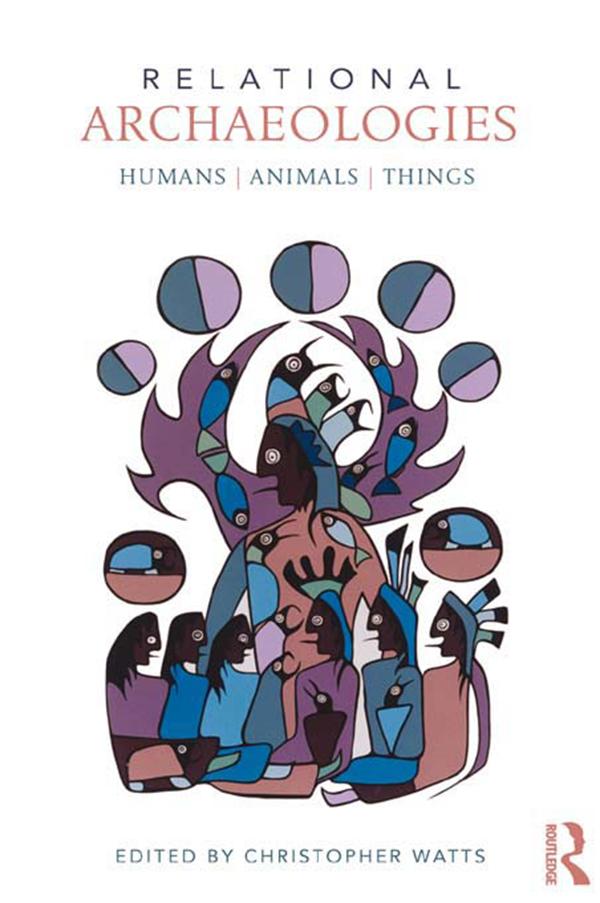
Many of us accept as uncontroversial the belief that the world is comprised of detached and disparate products, all of which are reducible to certain substances. Of those things that are alive, we acknowledge that some have agency while others, such as humans, have more advanced qualities such as consciousness, reason and intentionality. So deeply-seated is this metaphysical belief, along with the related distinctions we draw between subject/object, mind/body and nature/culture that many of us tacitly assume past groups approached and apprehended the world in a similar fashion. Relational Archaeologies questions how such a view of human beings, ‘other-than-human’ creatures and things affects our reconstruction of past beliefs and practices. It proceeds from the position that, in many cases, past societies understood their place in the world as positional rather than categorical, as persons bound up in reticular arrangements with similar and not so similar forms regardless of their substantive qualities. Relational Archaeologies explores this idea by emphasizing how humans, animals and things come to exist by virtue of the dynamic and fluid processes of connection and transaction. In highlighting various counter-Modern notions of what it means ‘to be’ and how these can be teased apart using archaeological materials, contributors provide a range of approaches from primarily theoretical/historicized treatments of the topic to practical applications or case studies from the Americas, the UK, Europe, Asia and Australia.
Betal nemt med kort, Klarna, Apple Pay eller Google Pay. Ikke tilfreds? Du har altid 14 dages fortrydelsesret. Læs mere i vores vilkår. Har du spørgsmål, så send os en mail på hello@memmo.org.
Memmo gør det nemmere at studere – uanset hvor du er i verden. Hos os samler du dine kursusbøger og smarte studieværktøjer ét sted: resuméer, quizzer, podcasts og flashcards. Og så er der Ted, din studieven, der svarer på alt, du undrer dig over. Over 50 000 studerende studerer allerede her – bygget til at hjælpe dig med at lære hurtigere og stresse mindre.