
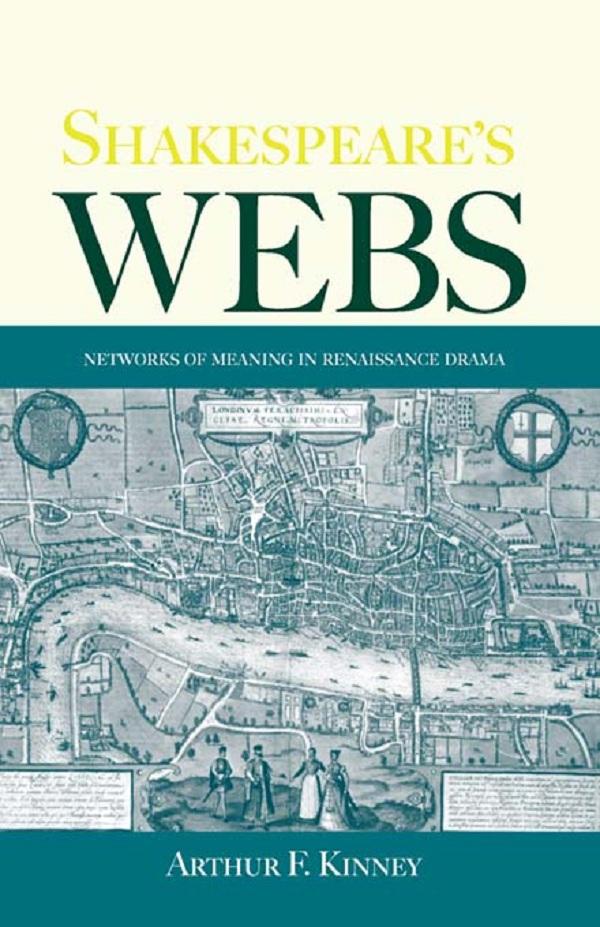
In this book, renowned Renaissance drama critic Arthur F. Kinney argues that Shakespeare's method of composing plays through networks of meanings can be seen as a harbinger of today's information technology. Drawing upon hypertext and cognitive theory--areas that have for some time promised to take on more importance in the sphere of Shakespeare Studies--as well as the central metaphor of the Routledge collection The Renaissance Computer, Kinney looks in detail at four objects/images in Shakespeare's plays--mirrors, maps, clocks, and books--and explores the ways in which they make up networks of meaning within single plays and across the dramatist's body of work that anticipate in some ways the networks of meaning or "information" now possible in the computer age.
Betal nemt med kort, Klarna, Apple Pay eller Google Pay. Ikke tilfreds? Du har altid 14 dages fortrydelsesret. Læs mere i vores vilkår. Har du spørgsmål, så send os en mail på hello@memmo.org.
Memmo gør det nemmere at studere – uanset hvor du er i verden. Hos os samler du dine kursusbøger og smarte studieværktøjer ét sted: resuméer, quizzer, podcasts og flashcards. Og så er der Ted, din studieven, der svarer på alt, du undrer dig over. Over 50 000 studerende studerer allerede her – bygget til at hjælpe dig med at lære hurtigere og stresse mindre.
Du kan måske også lide
Køb bogen0