
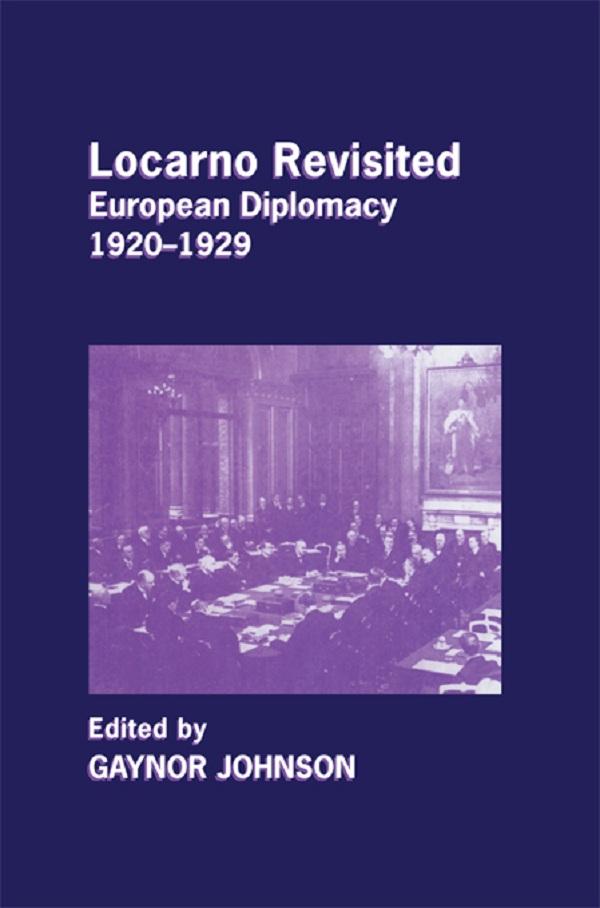
This collection of essays examines European politics and diplomacy in the 1920s, with special emphasis on the Treaty of Locarno of 1925, often seen as the 'real' peace treaty at the end of the First World War.
Contributors discuss the diplomacy of the principle countries that signed the Treaty of Locarno in 1925 and consider the issues of greatest importance to the study of European history in the 1920s. They also assess whether the treaty could be seen as the 'real' peace treaty with Germany at the end of the First World War. Key chapters include: Locarno, Britain and the Security of Europe; Locarno: Early Test of Fascist Intentions; Locarno and the Irrelevance of Disarmament.
'Locarno diplomacy' meant different things to each of the countries involved. The inability of contemporaries to arrive at a working consensus about what the treaty was intended to achieve weakened it and paved the way for its destruction. Unlike the Paris Peace Conference, however, the Treaty of Locarno and the era of diplomacy to which it gave its name, were not always seen as flawed. Until 1945, they were held up as one of the high points of European diplomacy in the 1920s. This book asks whether it is still appropriate to under-rate the importance of the Treaty of Locarno
Betal nemt med kort, Klarna, Apple Pay eller Google Pay. Ikke tilfreds? Du har altid 14 dages fortrydelsesret. Læs mere i vores vilkår. Har du spørgsmål, så send os en mail på hello@memmo.org.
Memmo gør det nemmere at studere – uanset hvor du er i verden. Hos os samler du dine kursusbøger og smarte studieværktøjer ét sted: resuméer, quizzer, podcasts og flashcards. Og så er der Ted, din studieven, der svarer på alt, du undrer dig over. Over 50 000 studerende studerer allerede her – bygget til at hjælpe dig med at lære hurtigere og stresse mindre.
Du kan måske også lide
Køb bogen0