
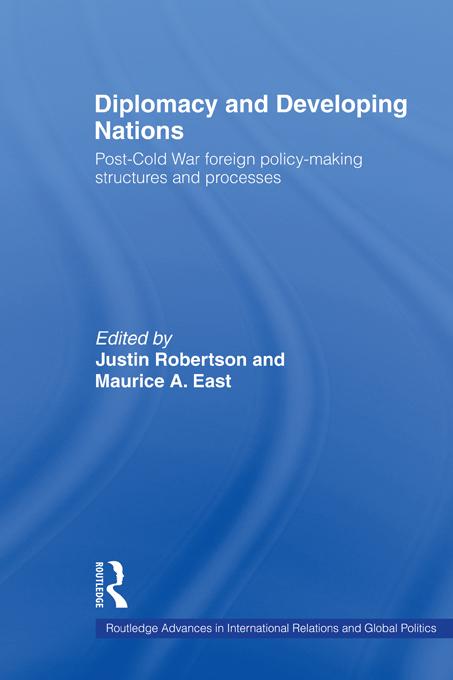
This volume explores the foreign policy environment facing developing nations and their particular foreign policy-making structures and processes. By defining foreign policy broadly to incorporate the activities of a range of state actors and non-state actors, the book broadens the range of analytical frameworks for studying foreign policy-making in developing nations. Thus, the actions of small groups of elites, international institutions and transnational networks are seen to be part of foreign policy-making, as well as the traditional operations of foreign ministries.
The volume is comprised of an extensive introduction, four thematic chapters, six country studies and a conclusion that ties together common themes. These serve as a useful contribution to the analysis of foreign policy-making in developing nations, a neglected area in the comparative study of foreign policy.
Betal nemt med kort, Klarna, Apple Pay eller Google Pay. Ikke tilfreds? Du har altid 14 dages fortrydelsesret. Læs mere i vores vilkår. Har du spørgsmål, så send os en mail på hello@memmo.org.
Memmo gør det nemmere at studere – uanset hvor du er i verden. Hos os samler du dine kursusbøger og smarte studieværktøjer ét sted: resuméer, quizzer, podcasts og flashcards. Og så er der Ted, din studieven, der svarer på alt, du undrer dig over. Over 50 000 studerende studerer allerede her – bygget til at hjælpe dig med at lære hurtigere og stresse mindre.
Du kan måske også lide
Køb bogen0