
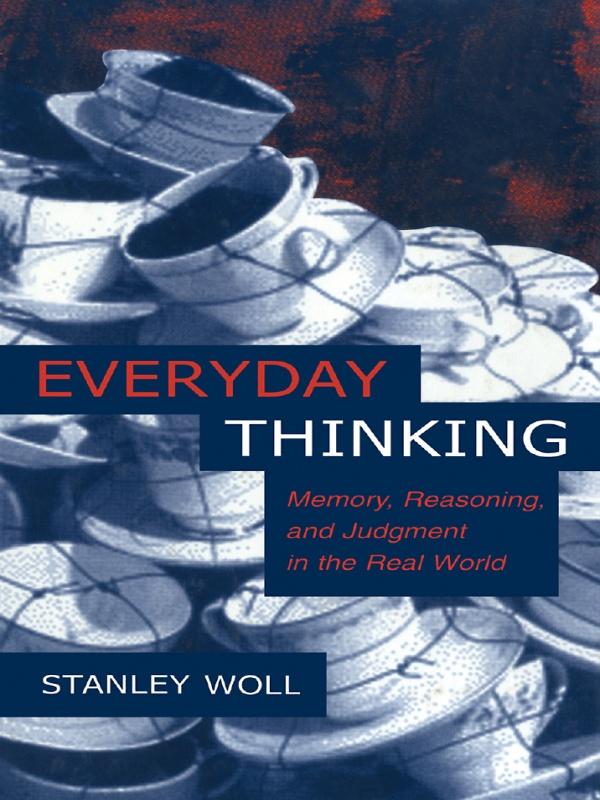
Appropriate as a textbook for courses in cognitive psychology or social cognition, Everyday Thinking reviews the rapidly growing literature on cognition in naturalistic settings. It differs from other textbooks in that, where possible, it focuses on thinking in real-world settings rather than in controlled laboratory settings and provides detailed treatments of each of the following topics:
* how we form impressions of and represent persons in memory;
* how we recognize and represent faces;
* how we reason in our day-to-day lives and go about solving everyday problems;
* how we make judgments and decisions;
* how we encode memories of events--both for future action and for our own life histories; and
* what are some of the implications of everyday knowledge and cognition for education and instruction.
This book presents the theoretical positions and research evidence on each of these topics and examines the generally unexplored connections among them. As a result, this book presents the study of cognition in a more relevant form and in a context that readers can more readily apply to their own lives.
Betal nemt med kort, Klarna, Apple Pay eller Google Pay. Ikke tilfreds? Du har altid 14 dages fortrydelsesret. Læs mere i vores vilkår. Har du spørgsmål, så send os en mail på hello@memmo.org.
Memmo gør det nemmere at studere – uanset hvor du er i verden. Hos os samler du dine kursusbøger og smarte studieværktøjer ét sted: resuméer, quizzer, podcasts og flashcards. Og så er der Ted, din studieven, der svarer på alt, du undrer dig over. Over 50 000 studerende studerer allerede her – bygget til at hjælpe dig med at lære hurtigere og stresse mindre.