
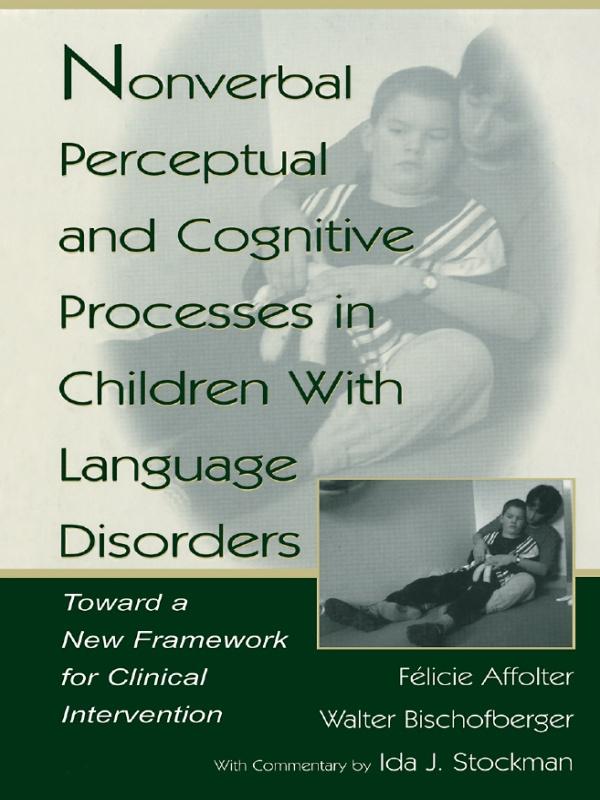
A growing body of literature is suggesting that many children with language disorders and delays--even those with so-called specific language impairment--have difficulties in other domains as well. In this pathbreaking book, the authors draw on more than 40 years of research and clinical observations of populations ranging from various groups of children to adults with brain damage to construct a comprehensive model for the development of the interrelated skills involved in language performance, and trace the crucial implications of this model for intervention. Early tactual feedback, they argue, is more critical for the perceptual/cognitive organization of experiences that constitutes a foundation for language development than either visual or auditory input, and the importance of tactually-anchored nonverbal interaction cannot be ignored if efforts at treatment are to be successful.
All those professionally involved in work with children and adults with language problems will find the authors' model provocative and useful.
Betal nemt med kort, Klarna, Apple Pay eller Google Pay. Ikke tilfreds? Du har altid 14 dages fortrydelsesret. Læs mere i vores vilkår. Har du spørgsmål, så send os en mail på hello@memmo.org.
Memmo gør det nemmere at studere – uanset hvor du er i verden. Hos os samler du dine kursusbøger og smarte studieværktøjer ét sted: resuméer, quizzer, podcasts og flashcards. Og så er der Ted, din studieven, der svarer på alt, du undrer dig over. Over 50 000 studerende studerer allerede her – bygget til at hjælpe dig med at lære hurtigere og stresse mindre.