
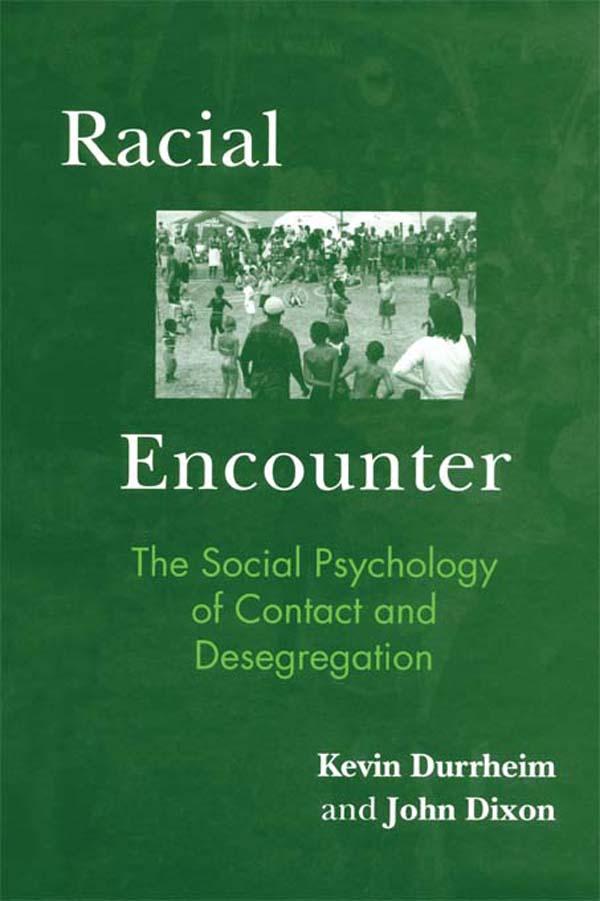
The political and legislative changes which took place in South Africa during the 1990s, with the dissolution of apartheid, created a unique set of social conditions. As official policies of segregation were abolished, people of both black and white racial groups began to experience new forms of social contact and intimacy.
By examining these emerging processes of intergroup contact in South Africa, and evaluating related evidence from the US, Racial Encounter offers a social psychological account of desegregation. It begins with a critical analysis of the traditional theories and research models used to understand desegregation: the contact hypothesis and race attitude theory. It then analyzes every day discourse about desegregation in South Africa, showing how discourse shapes individuals' conception and management of their changing relationships and acts as a site of ideological resistance to social change. The connection between place, identity and re-creation of racial boundaries emerge as a central theme of this analysis.
This book will be of interest to social psychologists, students of intergroup relations and all those interested in post-apartheid South Africa.
Betal nemt med kort, Klarna, Apple Pay eller Google Pay. Ikke tilfreds? Du har altid 14 dages fortrydelsesret. Læs mere i vores vilkår. Har du spørgsmål, så send os en mail på hello@memmo.org.
Memmo gør det nemmere at studere – uanset hvor du er i verden. Hos os samler du dine kursusbøger og smarte studieværktøjer ét sted: resuméer, quizzer, podcasts og flashcards. Og så er der Ted, din studieven, der svarer på alt, du undrer dig over. Over 50 000 studerende studerer allerede her – bygget til at hjælpe dig med at lære hurtigere og stresse mindre.