
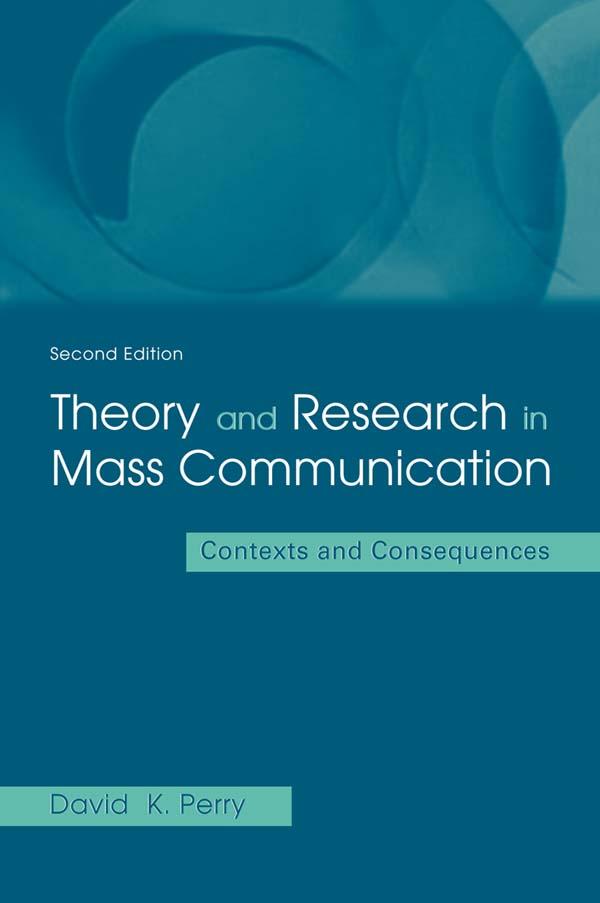
This updated edition presents a civic journalism treatment of the field of mass communication research. The sine qua non of the civic journalism movement seems to center around an implicit assumption that the human mind is an evolved part in the natural world, not a detached spectator as much traditional philosophy assumes. Thus, it has attempted to encourage journalists and members of their audiences to participate actively in civic life. Applying the same idea to mass communication academics, this book focuses on the empirical consequences of their work, especially its possible impact on human life. It argues that researchers need to connect with the broader communities in which they live and considers the impact of media research on society.
Features of the second edition include:
*detailed update of research evidence concerning the media violence issue;
*additional material concerning media ownership structures and their possible relationship to media content and effects;
*new material focusing on the impact of tobacco and alcohol advertising;
*updated and expanded section concerning the history of media studies; and
*an expanded discussion of philosophical issues pertaining to theory construction.
This book is intended for graduate and advanced undergraduate students studying mass communication theory and related subjects, such as communication theory, media effects, media literacy, and media and society.
Betal nemt med kort, Klarna, Apple Pay eller Google Pay. Ikke tilfreds? Du har altid 14 dages fortrydelsesret. Læs mere i vores vilkår. Har du spørgsmål, så send os en mail på hello@memmo.org.
Memmo gør det nemmere at studere – uanset hvor du er i verden. Hos os samler du dine kursusbøger og smarte studieværktøjer ét sted: resuméer, quizzer, podcasts og flashcards. Og så er der Ted, din studieven, der svarer på alt, du undrer dig over. Over 50 000 studerende studerer allerede her – bygget til at hjælpe dig med at lære hurtigere og stresse mindre.