
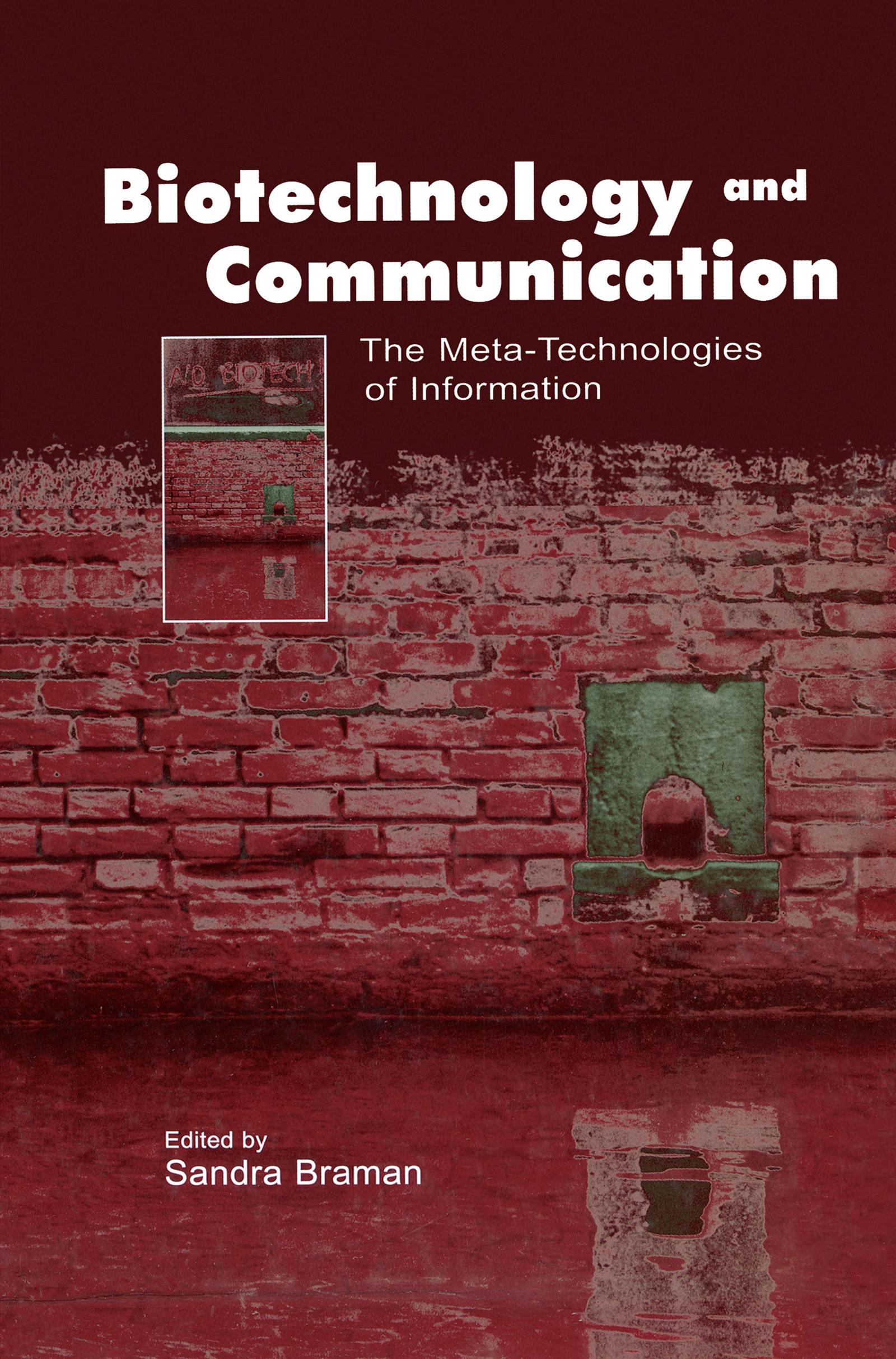
This volume examines the convergence of biotechnology and communication systems and explores how this convergence directly influences our understanding of the nature of communication. Editor Sandra Braman brings together scholars to examine this convergence in three areas: genetic information and "facticity"; social issues and implications; and the economic and legal issues raised by the production and ownership of information. The work highlights the sophisticated processes taking place as biotechnology and information technology systems continue to evolve.
The chapters in this book approach the complex history of this topic and the issues it raises from a number of directions. It begins by examining the shared features and spaces of biotechnology and digital information technologies as meta-technologies--qualitatively distinct from both the tools first used in the premodern era and the industrial technologies that characterized modernity. Next, the book explores what is and is not useful in treating the types of information processed by the two meta-technologies through a shared conceptual lens and looks at issues raised by the ownership of genetic and digital information. The final chapters are concerned with relationships between information and power.
Defining a future research agenda for communication scholarship, this work is beneficial to scholars and students in science communication, cultural studies, information technologies, and sociology.
Betal nemt med kort, Klarna, Apple Pay eller Google Pay. Ikke tilfreds? Du har altid 14 dages fortrydelsesret. Læs mere i vores vilkår. Har du spørgsmål, så send os en mail på hello@memmo.org.
Memmo gør det nemmere at studere – uanset hvor du er i verden. Hos os samler du dine kursusbøger og smarte studieværktøjer ét sted: resuméer, quizzer, podcasts og flashcards. Og så er der Ted, din studieven, der svarer på alt, du undrer dig over. Over 50 000 studerende studerer allerede her – bygget til at hjælpe dig med at lære hurtigere og stresse mindre.