
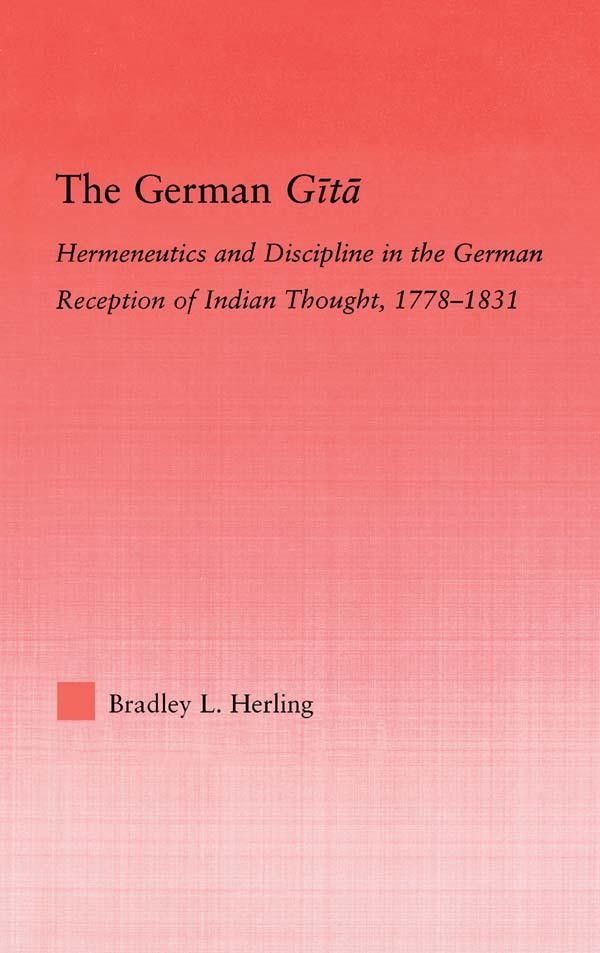
How did the Bhagavadgãtà first become an object of German philosophical and philological inquiry? How were its foundational concepts initially interpreted within German intellectual circles, and what does this episode in the history of cross-cultural encounter teach us about the status of comparative philosophy today? This book addresses these questions through a careful study of the figures who read, translated and interpreted the Bhagavadgãtà around the turn of the nineteenth century in Germany: J.G. Herder, F. Majer, F. Schlegel, A.W. Schlegel, W. von Humboldt, and G.W.F. Hegel. Methodologically, the study attends to the intellectual contexts and prejudices that framed the early reception of the text. But it also delves deeper by investigating the way these frameworks inflected the construction of the Bhagavadgãtà and its foundational concepts through the scholarly acts of excerpting, anthologization, and translation. Overall, the project contributes to the pluralization of Western philosophy and its history while simultaneously arguing for a continued critical alertness in cross-cultural comparison of philosophical and religious worldviews.
Betal nemt med kort, Klarna, Apple Pay eller Google Pay. Ikke tilfreds? Du har altid 14 dages fortrydelsesret. Læs mere i vores vilkår. Har du spørgsmål, så send os en mail på hello@memmo.org.
Memmo gør det nemmere at studere – uanset hvor du er i verden. Hos os samler du dine kursusbøger og smarte studieværktøjer ét sted: resuméer, quizzer, podcasts og flashcards. Og så er der Ted, din studieven, der svarer på alt, du undrer dig over. Over 50 000 studerende studerer allerede her – bygget til at hjælpe dig med at lære hurtigere og stresse mindre.