
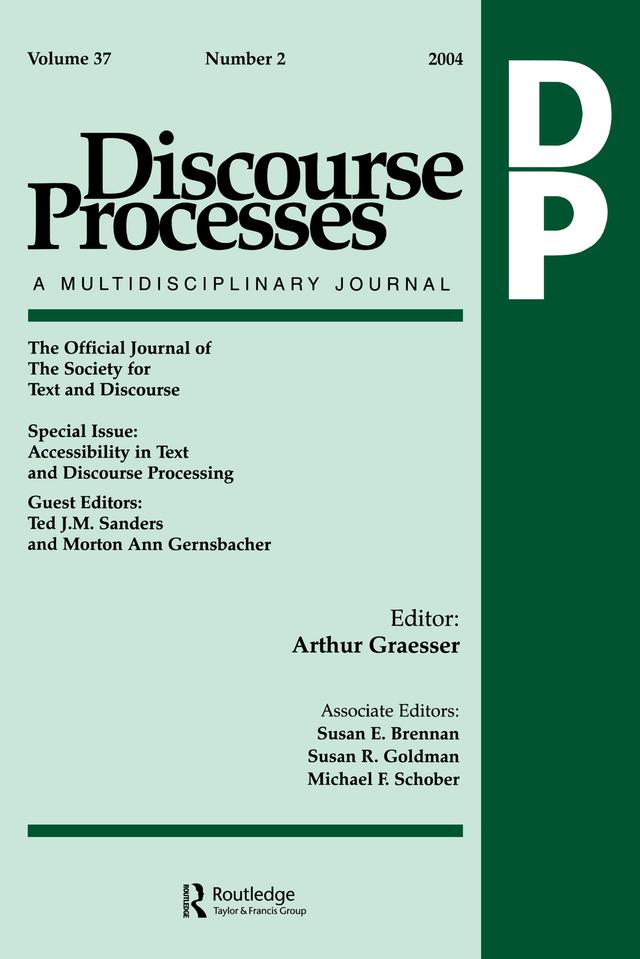
This special issue shows how accessibility phenomena need to be studied from a linguistic and psycholinguistic angle, and in the latter case from interpretation, as well as production. The contributions augment the growing knowledge of accessibility in text and discourse processing. They also illuminate how accessibility is marked in a text or a discourse, how readers and listeners respond to those markings, and how mental representations evolve and change as a direct result of accessibility. The editors hope is that the text affects the readers' representations in ways that linguists and psycholinguists theorize as beneficial.
Betal nemt med kort, Klarna, Apple Pay eller Google Pay. Ikke tilfreds? Du har altid 14 dages fortrydelsesret. Læs mere i vores vilkår. Har du spørgsmål, så send os en mail på hello@memmo.org.
Memmo gør det nemmere at studere – uanset hvor du er i verden. Hos os samler du dine kursusbøger og smarte studieværktøjer ét sted: resuméer, quizzer, podcasts og flashcards. Og så er der Ted, din studieven, der svarer på alt, du undrer dig over. Over 50 000 studerende studerer allerede her – bygget til at hjælpe dig med at lære hurtigere og stresse mindre.