
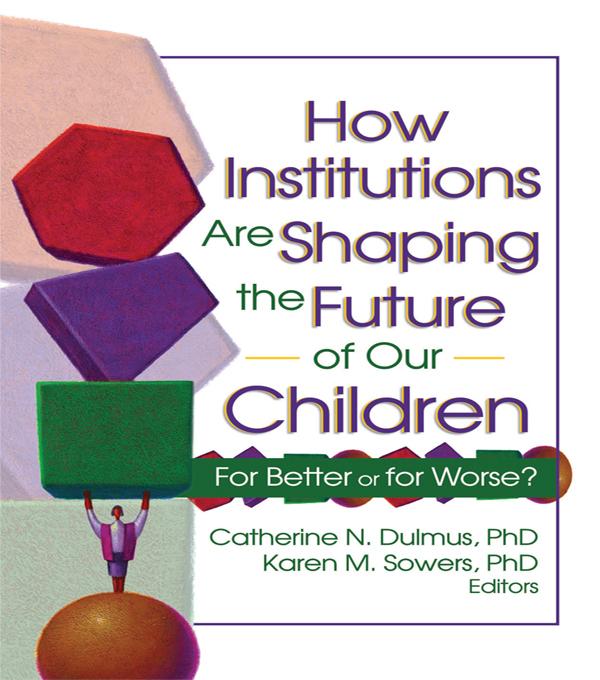
Improve services for children and youth with new concepts, different perspectives, and up-to-date information!
How Institutions are Shaping the Future of Our Children: For Better or for Worse? explores the positive and negative impacts of social institutions on child and adolescent well-being. Experts in the fields of social work and child welfare provide a broad perspective on how to improve outcomes for children and adolescents who receive institutional services either directly or indirectly. This book contains innovative strategies for reducing the negative outlook for children and families in shelters, foster homes, and residential treatment centers.
This book offers improvements for care services at such locations as:
- residential institutions
- state custody and foster homes
- schools
- youth development organizations
- urban public housing developments
- homeless shelters
In How Institutions are Shaping the Future of Our Children, you’ll discover current case studies that show how certain groupssuch as minorities and economically challenged children and familiesare stigmatized by the current child welfare system. You’ll also find new evidence of the detrimental effects that can occur as a result of institutionalization and the need to find alternatives to removing children and adolescents from family-style environments. This book contains tables to clarify the findings of these case studies, references to further your reading, and detailed descriptions of plans and programs that you can implement in your own social work practice.
How Institutions are Shaping the Future of Our Children presents new ways to create positive environments for children and adolescents, including:
- strengths-based approaches to practice with children with severe emotional and behavioral disturbances
- custody planning for the children of HIV-infected women
- discipline-specific education for child protection caseworkers
- creating supportive staff-youth relationships within all institutions
- multiple family group interventions which help to strengthen homeless families in preparation to transition to permanent housing
- the School Development Program, Child Development Project, and Comprehensive Quality Programminginterventions for preventing school drop-outs
- Life Plans for post-institutionalized youth
Betal nemt med kort, Klarna, Apple Pay eller Google Pay. Ikke tilfreds? Du har altid 14 dages fortrydelsesret. Læs mere i vores vilkår. Har du spørgsmål, så send os en mail på hello@memmo.org.
Memmo gør det nemmere at studere – uanset hvor du er i verden. Hos os samler du dine kursusbøger og smarte studieværktøjer ét sted: resuméer, quizzer, podcasts og flashcards. Og så er der Ted, din studieven, der svarer på alt, du undrer dig over. Over 50 000 studerende studerer allerede her – bygget til at hjælpe dig med at lære hurtigere og stresse mindre.