
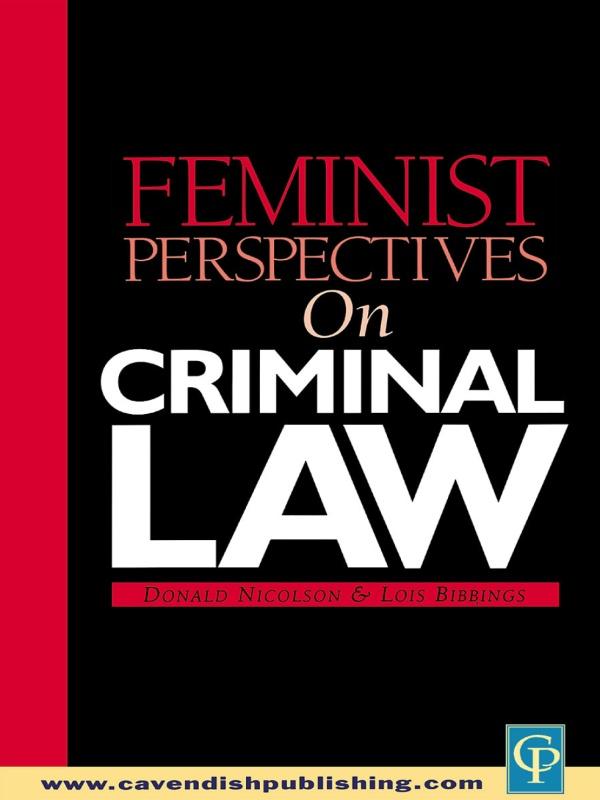
Criminal law has traditionally been taught and analysed as if the gender of criminals and their victims is irrelevant. It has also been taught and analysed as if criminal law doctrine has no connection with questions of criminalisation,crime detection, decisions to charge and prosecute, lawyers trial tactics, decisions as to guilt and sentencing policy and practice, all of which are significantly affected by gender.This book seeks to fill these gaps by looking at the major areas in which gender affects the way that suspected criminals and their victims are treated by the criminal justice system. However, this book is not just a supplement to traditional criminal law discourse. It is a dangerous supplement, in that the focus on gender challenges laws claim to neutrality and even-handed justice.The essays in this book establish that, not only does the law frequently fail to offer women the sort of protection from male violence and sexual invasion that they need, but it continues to discriminate on grounds of gender. Even when discriminating in favour of women, it does so in ways that reinforce dangerous gender stereotypes. More specifically, both criminal law doctrine and criminal justice personnel apply and reinforce ideas, on the one hand, of female passivity, irrationality and proneness to illness, and, on the other, of natural male aggression - both physical and sexual.
Betal nemt med kort, Klarna, Apple Pay eller Google Pay. Ikke tilfreds? Du har altid 14 dages fortrydelsesret. Læs mere i vores vilkår. Har du spørgsmål, så send os en mail på hello@memmo.org.
Memmo gør det nemmere at studere – uanset hvor du er i verden. Hos os samler du dine kursusbøger og smarte studieværktøjer ét sted: resuméer, quizzer, podcasts og flashcards. Og så er der Ted, din studieven, der svarer på alt, du undrer dig over. Over 50 000 studerende studerer allerede her – bygget til at hjælpe dig med at lære hurtigere og stresse mindre.
Du kan måske også lide
Køb bogen0