
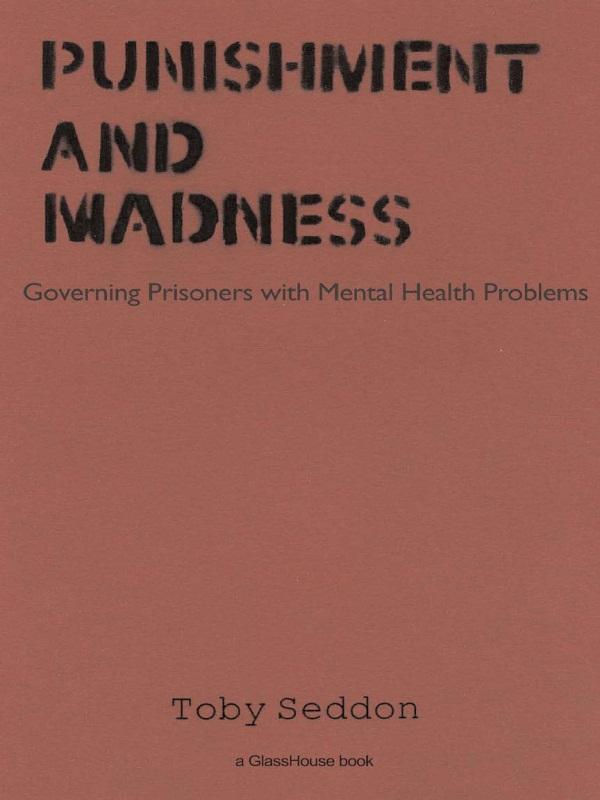
The focus of this book is on the government of prisoners with mental health problems in England and Wales over the last twenty-five years. The wider context and backdrop to the book is the shift to 'late modernity', which, since the 1970s has seen massive structural change in most Western societies, affecting the social, economic and cultural spheres, as well as the field of crime and punishment. This book investigates whether these profound transformations have also led to a reconfiguring of responses to mentally vulnerable offenders who end up in prison. Specifically, it explores how this group of prisoners has come to be viewed increasingly as sources of 'risk', requiring 'management' or containment, rather than as people suitable for therapeutic responses.
The book draws on primary research carried out by the author, including interviews with key informants involved in the field during this period, such as former cabinet ministers, senior civil servants, campaigners and academics. In conducting this investigation, the author has developed a method of research which combines and synthesizes different forms of analysis to create a novel approach to socio-historical research.
Betal nemt med kort, Klarna, Apple Pay eller Google Pay. Ikke tilfreds? Du har altid 14 dages fortrydelsesret. Læs mere i vores vilkår. Har du spørgsmål, så send os en mail på hello@memmo.org.
Memmo gør det nemmere at studere – uanset hvor du er i verden. Hos os samler du dine kursusbøger og smarte studieværktøjer ét sted: resuméer, quizzer, podcasts og flashcards. Og så er der Ted, din studieven, der svarer på alt, du undrer dig over. Over 50 000 studerende studerer allerede her – bygget til at hjælpe dig med at lære hurtigere og stresse mindre.