
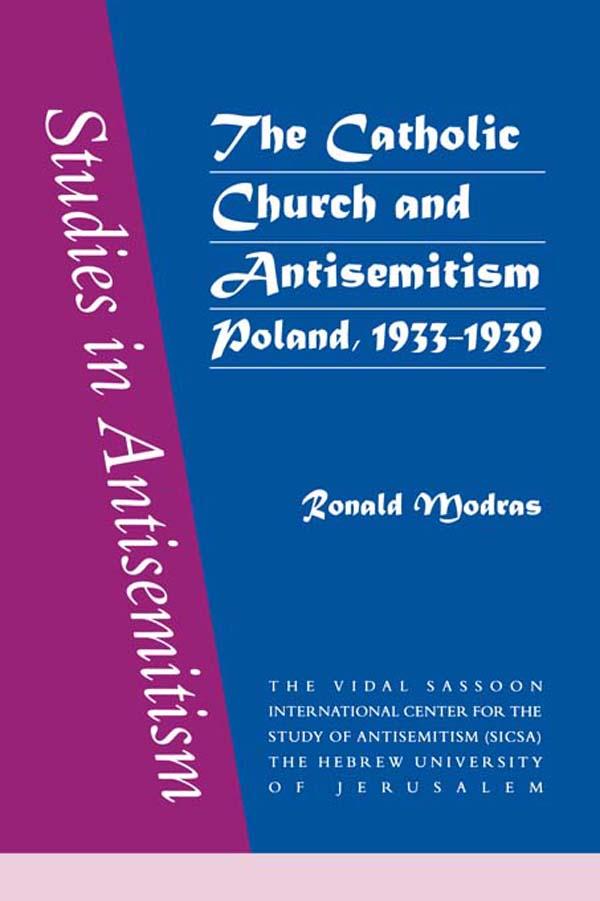
Interwar Poland was home to more Jews than any other country in Europe. Its commonplace but simplistic identification with antisemitism was due largely to nationalist efforts to boycott Jewish business. That they failed was not for want of support by the Catholic clergy, for whom the ''Jewish question'' was more than economic. The myth of a Masonic-Jewish alliance to subvert Christian culture first flourished in France but held considerable sway over Catholics in 1930s Poland as elsewhere. This book examines how, following Vatican policy, Polish church leaders resisted separation of church and state in the name of Catholic culture. In that struggle, every assimilated Jew served as both a symbol and a potential agent of security. Antisemitism is no longer regarded as a legitimate political stance. But in Europe, the United States, and the Middle East, the issues of religious culture, national identity, and minorities are with us still. This study of interwar Poland will shed light on dilemmas that still effect us today.
Betal nemt med kort, Klarna, Apple Pay eller Google Pay. Ikke tilfreds? Du har altid 14 dages fortrydelsesret. Læs mere i vores vilkår. Har du spørgsmål, så send os en mail på hello@memmo.org.
Memmo gør det nemmere at studere – uanset hvor du er i verden. Hos os samler du dine kursusbøger og smarte studieværktøjer ét sted: resuméer, quizzer, podcasts og flashcards. Og så er der Ted, din studieven, der svarer på alt, du undrer dig over. Over 50 000 studerende studerer allerede her – bygget til at hjælpe dig med at lære hurtigere og stresse mindre.
Du kan måske også lide
Køb bogen0