
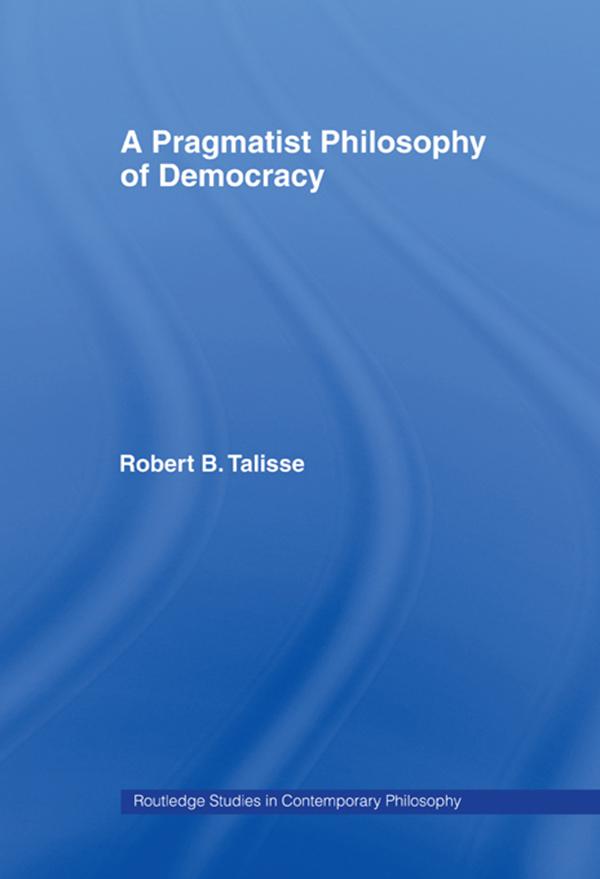
In recent years there has been a renewed interest in American pragmatism. In political philosophy, the revival of pragmatism has led to a new appreciation for the democratic theory of John Dewey.
In this book, Robert B. Talisse advances a series of pragmatic arguments against Deweyan democracy. Particularly, Talisse argues that Deweyan democracy cannot adequately recognize pluralism, the fact that intelligent, sincere, and well-intentioned persons can disagree sharply and reasonably over moral ideals. Drawing upon the epistemology of the founder of pragmatism, Charles S. Peirce, Talisse develops a conception of democracy that is anti-Deweyan but nonetheless pragmatist. Talisse then brings the Peircean view into critical conversation with contemporary developments in democratic theory, including deliberative democracy, Rawlsian political liberalism, and Richard Posner’s democratic realism. The result is a new pragmatist option in democratic theory.
Betal nemt med kort, Klarna, Apple Pay eller Google Pay. Ikke tilfreds? Du har altid 14 dages fortrydelsesret. Læs mere i vores vilkår. Har du spørgsmål, så send os en mail på hello@memmo.org.
Memmo gør det nemmere at studere – uanset hvor du er i verden. Hos os samler du dine kursusbøger og smarte studieværktøjer ét sted: resuméer, quizzer, podcasts og flashcards. Og så er der Ted, din studieven, der svarer på alt, du undrer dig over. Over 50 000 studerende studerer allerede her – bygget til at hjælpe dig med at lære hurtigere og stresse mindre.