
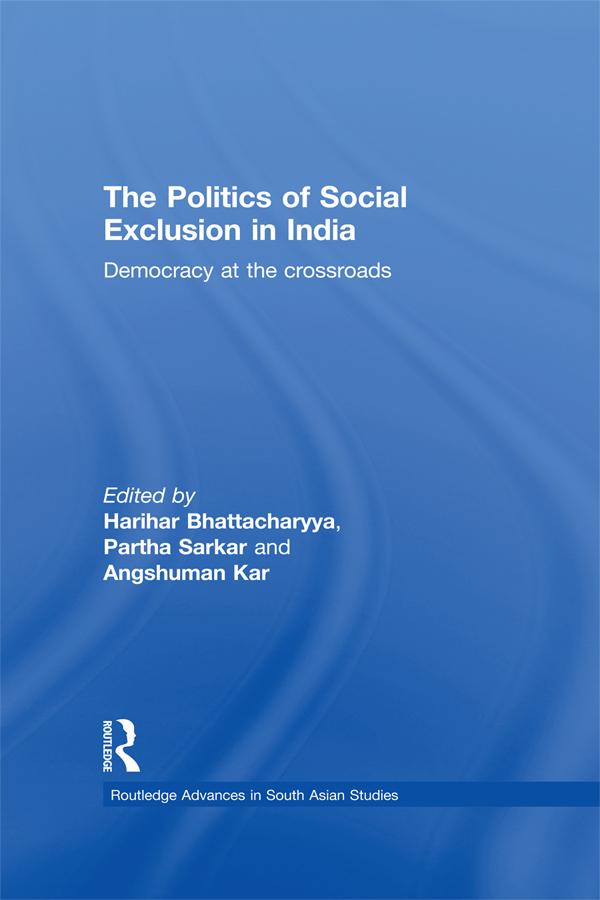
Social exclusion and inclusion remain issues of fundamental importance to democracy. Both exclusion and inclusion relate to the access to participation in the public realm, public goods and services for certain groups of people who are minorities, marginalized and deprived. Democratization has led to the inclusion of the previously excluded in the political process. While the problems of exclusion remain even in advanced Western countries in respect of the minorities of sorts, and the underprivileged, the problem of deep-rooted social and cultural exclusions is acute in post-colonial countries, including India. This book analyses social exclusions in India, which remain the most solid challenges to Indian democracy and development. Communal clashes, ethnic riots, political secessionist movements and extremist violence take place almost routinely, and are the outward manifestations of the entrenched culture of social exclusion in India. With its interdisciplinary approach, the book looks at the multidimensional problems of social exclusion and inclusion, providing a critical, comprehensive analysis of the problem and of potential solutions. The authors are experts in the fields of historical sociology, anthropology, political theory, social philosophy, economics and indigenous vernacular literature. Overall, the book offers an innovative theoretical perspective of the long-term issues facing contemporary Indian democracy.
Betal nemt med kort, Klarna, Apple Pay eller Google Pay. Ikke tilfreds? Du har altid 14 dages fortrydelsesret. Læs mere i vores vilkår. Har du spørgsmål, så send os en mail på hello@memmo.org.
Memmo gør det nemmere at studere – uanset hvor du er i verden. Hos os samler du dine kursusbøger og smarte studieværktøjer ét sted: resuméer, quizzer, podcasts og flashcards. Og så er der Ted, din studieven, der svarer på alt, du undrer dig over. Over 50 000 studerende studerer allerede her – bygget til at hjælpe dig med at lære hurtigere og stresse mindre.