
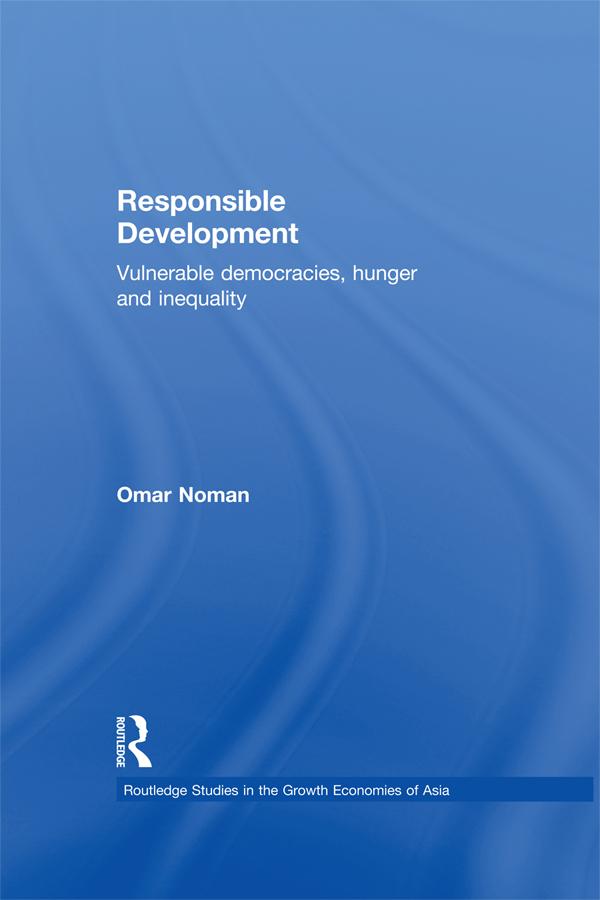
Until the dramatic economic collapse of 1997, East Asia was the symbol of a successful market-led development strategy for Western governments, aid agencies and academics, despite underlying concerns about a lack of rights and freedoms. The crisis changed Asia and the world; currency depreciations, personal and state indebtedness, mass unemployment and rioting brought the paternalistic capitalist phase to an end in Asia. The decade following the economic crisis has seen a swift response, with the major restructuring of Asian economies, improved corporate governance, banks recapitalized, more attention paid to the environment and foreign exchange reserves restored so the IMF became redundant in Asia.
Dividing the countries that emerged from the crisis into three categories – the Insecure Rich, the New Aspirants for Prosperity and the Danger Zone – Noman analyses the complex Asian recovery and future challenges within the framework of Responsible Development, an agenda for Asia that emphasizes the simultaneous challenge of building sustainable democracies, a viable environment and an equitable economy. Covering the many related issues that pose a threat to Asian economic stability – climate change, religious fascism, inequality and hunger – this book will have particular relevance in the areas of development studies, economics, international politics and Asian studies.
Betal nemt med kort, Klarna, Apple Pay eller Google Pay. Ikke tilfreds? Du har altid 14 dages fortrydelsesret. Læs mere i vores vilkår. Har du spørgsmål, så send os en mail på hello@memmo.org.
Memmo gør det nemmere at studere – uanset hvor du er i verden. Hos os samler du dine kursusbøger og smarte studieværktøjer ét sted: resuméer, quizzer, podcasts og flashcards. Og så er der Ted, din studieven, der svarer på alt, du undrer dig over. Over 50 000 studerende studerer allerede her – bygget til at hjælpe dig med at lære hurtigere og stresse mindre.