
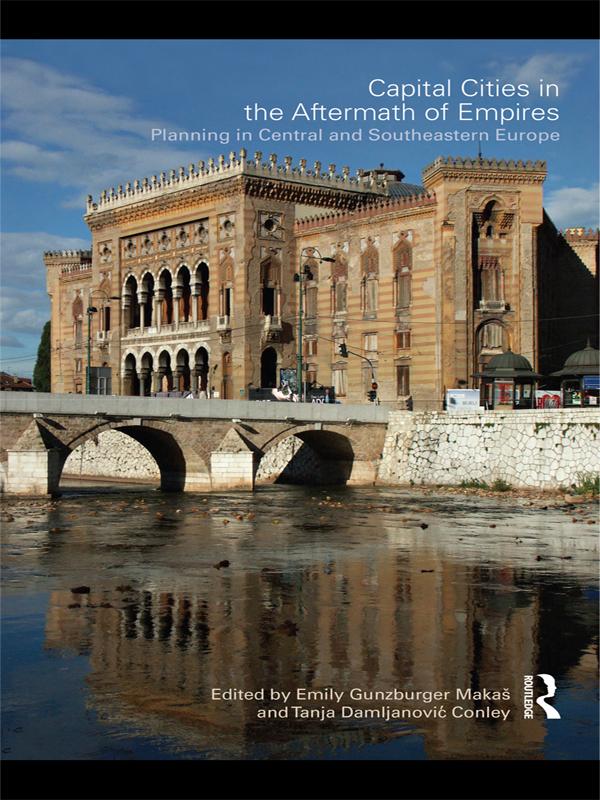
This book explores the planning and architectural histories of the cities across Central and Southeastern Europe transformed into the cultural and political capitals of the new nationstates created in the late nineteenth and early twentieth centuries. In their introduction, editors Makaš and Conley discuss the interrelated processes of nationalization, modernization, and Europeanization in the region at that time, with special attention paid to the way architectural and urban models from Western and Central Europe were adapted to fit the varying local physical and political contexts.
Individual studies provide summaries of proposed and realized projects in fourteen cities.Each addresses the political and ideological aspects of the city’s urban history, including the idea of becoming a cultural and/or political capital as well as the relationship between national and urban development. The concluding chapter builds on the introductory argument about how the search for national identity combined with the pursuit of modernization and desire to be more European drove the development of these cities in the aftermath of empires.
Betal nemt med kort, Klarna, Apple Pay eller Google Pay. Ikke tilfreds? Du har altid 14 dages fortrydelsesret. Læs mere i vores vilkår. Har du spørgsmål, så send os en mail på hello@memmo.org.
Memmo gør det nemmere at studere – uanset hvor du er i verden. Hos os samler du dine kursusbøger og smarte studieværktøjer ét sted: resuméer, quizzer, podcasts og flashcards. Og så er der Ted, din studieven, der svarer på alt, du undrer dig over. Over 50 000 studerende studerer allerede her – bygget til at hjælpe dig med at lære hurtigere og stresse mindre.