
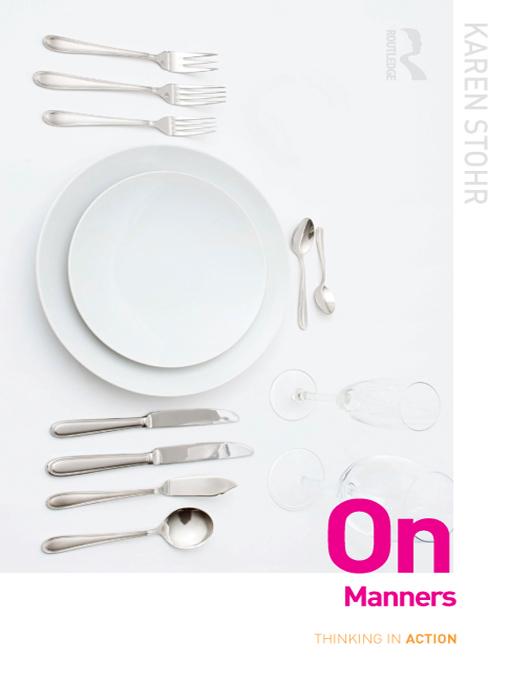
Many otherwise enlightened people often dismiss etiquette as a trivial subject or—worse yet—as nothing but a disguise for moral hypocrisy or unjust social hierarchies. Such sentiments either mistakenly assume that most manners merely frame the “real issues” of any interpersonal exchange or are the ugly vestiges of outdated, unfair social arrangements. But in On Manners, Karen Stohr turns the tables on these easy prejudices, demonstrating that the scope of manners is much broader than most people realize and that manners lead directly to the roots of enduring ethical questions. Stohr suggests that though manners are mostly conventional, they are nevertheless authoritative insofar as they are a primary means by which we express moral attitudes and commitments and carry out important moral goals.
Drawing primarily on Aristotle and Kant and with references to a wide range of cultural examples—from Jane Austen’s Pride and Prejudice to Larry David’s Curb Your Enthusiasm—the author ultimately concludes that good manners are essential to moral character.
Betal nemt med kort, Klarna, Apple Pay eller Google Pay. Ikke tilfreds? Du har altid 14 dages fortrydelsesret. Læs mere i vores vilkår. Har du spørgsmål, så send os en mail på hello@memmo.org.
Memmo gør det nemmere at studere – uanset hvor du er i verden. Hos os samler du dine kursusbøger og smarte studieværktøjer ét sted: resuméer, quizzer, podcasts og flashcards. Og så er der Ted, din studieven, der svarer på alt, du undrer dig over. Over 50 000 studerende studerer allerede her – bygget til at hjælpe dig med at lære hurtigere og stresse mindre.