
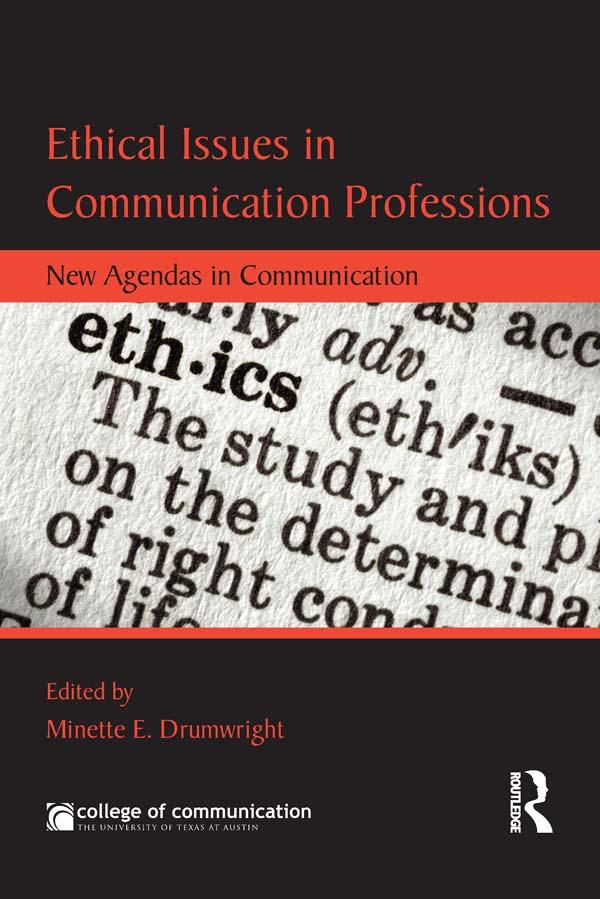
Dynamic, rapid, and radical changes are transforming the communication professions, provoking major implications for ethics. Traditional boundaries blur as media converge; relentless competitive pressures cause some forms of communication to atrophy and permit others to explode; and technological advances occur daily. In this volume, a new generation of scholars take a fresh look at the manner in which ethical issues manifest themselves in their areas of research and suggest new agendas for future research.
This book addresses a wide range of questions from a variety of communication professions. Contributors tackle such issues as how to define a journalist in an era when anyone can disseminate information to a global audience; how to use "advergames," crowdsourcing, and facial recognition technology in advertising responsibly; and how to respond ethically in situations of public crisis communication, among many others. This volume will be critical reading for scholars and professionals in media, communication, and digital arts, as well as philosophy, government, public policy, business, and law.
Betal nemt med kort, Klarna, Apple Pay eller Google Pay. Ikke tilfreds? Du har altid 14 dages fortrydelsesret. Læs mere i vores vilkår. Har du spørgsmål, så send os en mail på hello@memmo.org.
Memmo gør det nemmere at studere – uanset hvor du er i verden. Hos os samler du dine kursusbøger og smarte studieværktøjer ét sted: resuméer, quizzer, podcasts og flashcards. Og så er der Ted, din studieven, der svarer på alt, du undrer dig over. Over 50 000 studerende studerer allerede her – bygget til at hjælpe dig med at lære hurtigere og stresse mindre.