
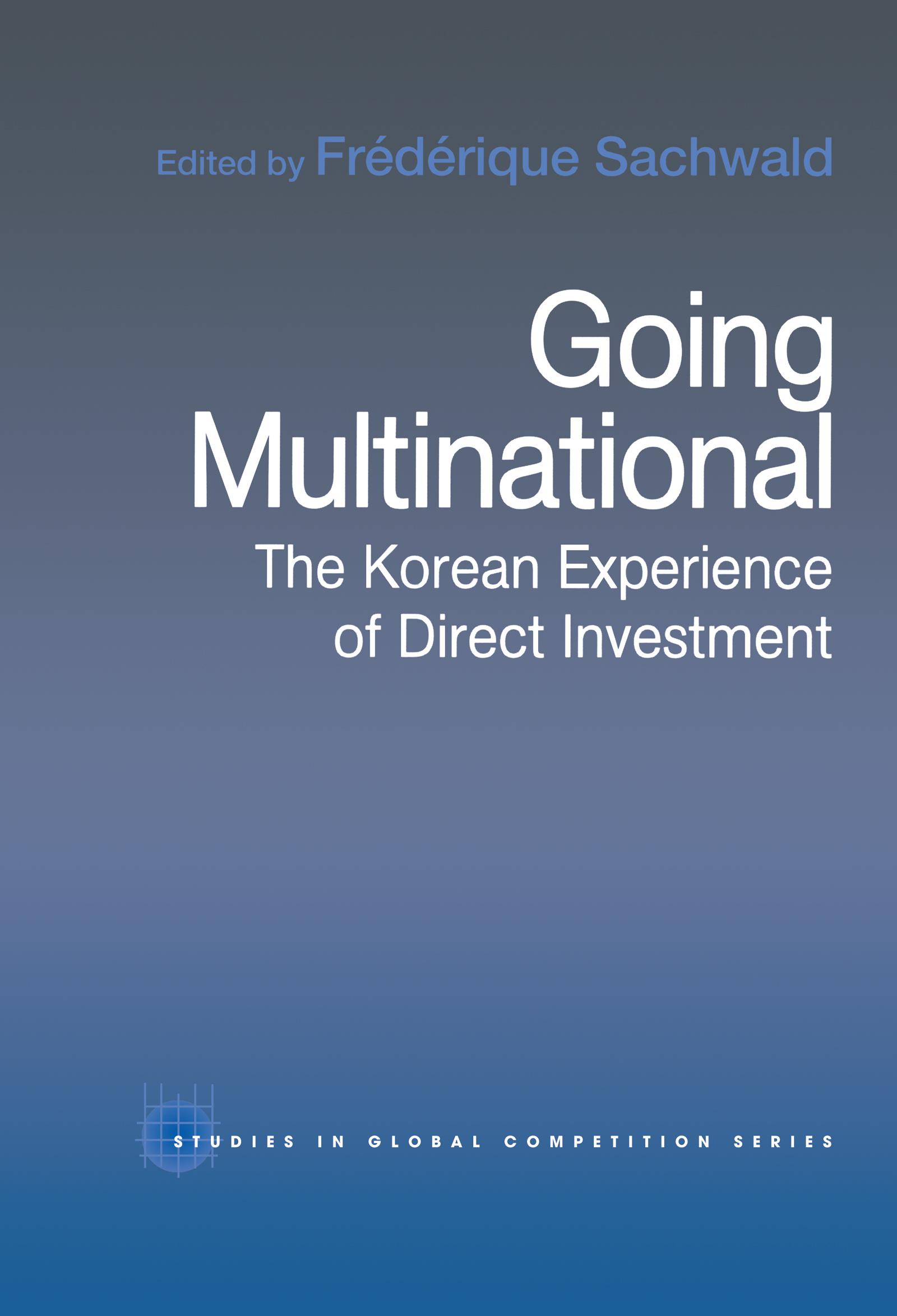
At the beginning of the 1990s, Korean firms embarked on an impressive wave of direct investment abroad. This dramatic multinationalization was considered as yet another sign of Korea's remarkable economic performance, especially as a high proportion of the foreign ventures were located in advanced countries. But this unbalanced quest for globalization actually tested the 'Korean model' to its limits; after the 1997 crisis a new policy prepared the way for a surge of inward investment. Using empirical tests and case-studies, this collection shows that Korean groups have invested in developed countries to jump over trade barriers, but also to source advanced technology and marketing capabilities. Moreover, their ambitious strategies have been stimulated by oligopolistic rivalry among the chaebols.
From a policy perspective, the book provides an original discussion of national ownership by questioning the substitutability between inward and outward foreign investment and its relationship with the evolution of the national innovation system. By shedding light on the pattern of Korea's internationalization, these essays make a valuable contribution to the theory of international production and provide important insights for the current policy debates on globalization and innovation-led growth.
Betal nemt med kort, Klarna, Apple Pay eller Google Pay. Ikke tilfreds? Du har altid 14 dages fortrydelsesret. Læs mere i vores vilkår. Har du spørgsmål, så send os en mail på hello@memmo.org.
Memmo gør det nemmere at studere – uanset hvor du er i verden. Hos os samler du dine kursusbøger og smarte studieværktøjer ét sted: resuméer, quizzer, podcasts og flashcards. Og så er der Ted, din studieven, der svarer på alt, du undrer dig over. Over 50 000 studerende studerer allerede her – bygget til at hjælpe dig med at lære hurtigere og stresse mindre.
Du kan måske også lide
Køb bogen0