
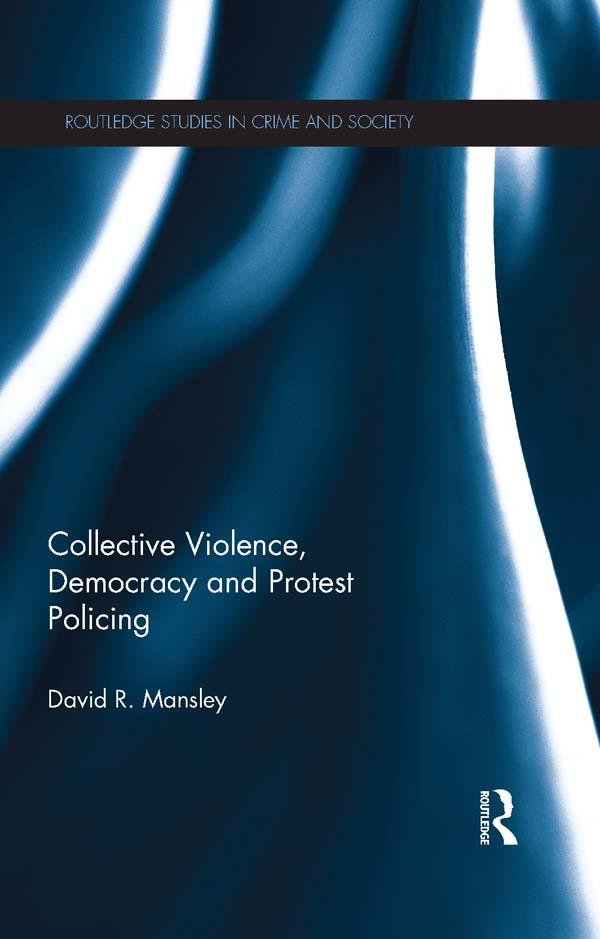
In this book David Mansley argues that the frequency with which violence intrudes on to the streets is related to both how society is governed and how it is policed. With the help of an innovative methodology, he quantifies and tests three variables – collective violence, democracy and protest policing – using protests in Great Britain in 1999–2011, for his sampling frame. The result is the design of new tools of measurement and a harvest of new data, including previously unpublished details of banning orders and riot damages, that enable us to reflect, with the benefit of broad sociological perspective, on the causes of contemporary violent events.
Mansley’s explanation of the trends he identifies draws from the work of the best thinkers on violence – especially Charles Tilly, Thomas Hobbes and Norbert Elias. He shows how the style of protest policing and the depth of democracy, both of which function under the direction of the political economy, are crucial to the state’s credentials as the monopoly supplier of legitimate violence. His discussion touches on such current topics as the institution of police commissioners, the privatisation of policing duties, and the decline in homicide.
This cultured study, which includes an engaging review of the existing scholarship on violence, is essential material for undergraduate and postgraduate students reading criminology, sociology or political theory.
Betal nemt med kort, Klarna, Apple Pay eller Google Pay. Ikke tilfreds? Du har altid 14 dages fortrydelsesret. Læs mere i vores vilkår. Har du spørgsmål, så send os en mail på hello@memmo.org.
Memmo gør det nemmere at studere – uanset hvor du er i verden. Hos os samler du dine kursusbøger og smarte studieværktøjer ét sted: resuméer, quizzer, podcasts og flashcards. Og så er der Ted, din studieven, der svarer på alt, du undrer dig over. Over 50 000 studerende studerer allerede her – bygget til at hjælpe dig med at lære hurtigere og stresse mindre.