
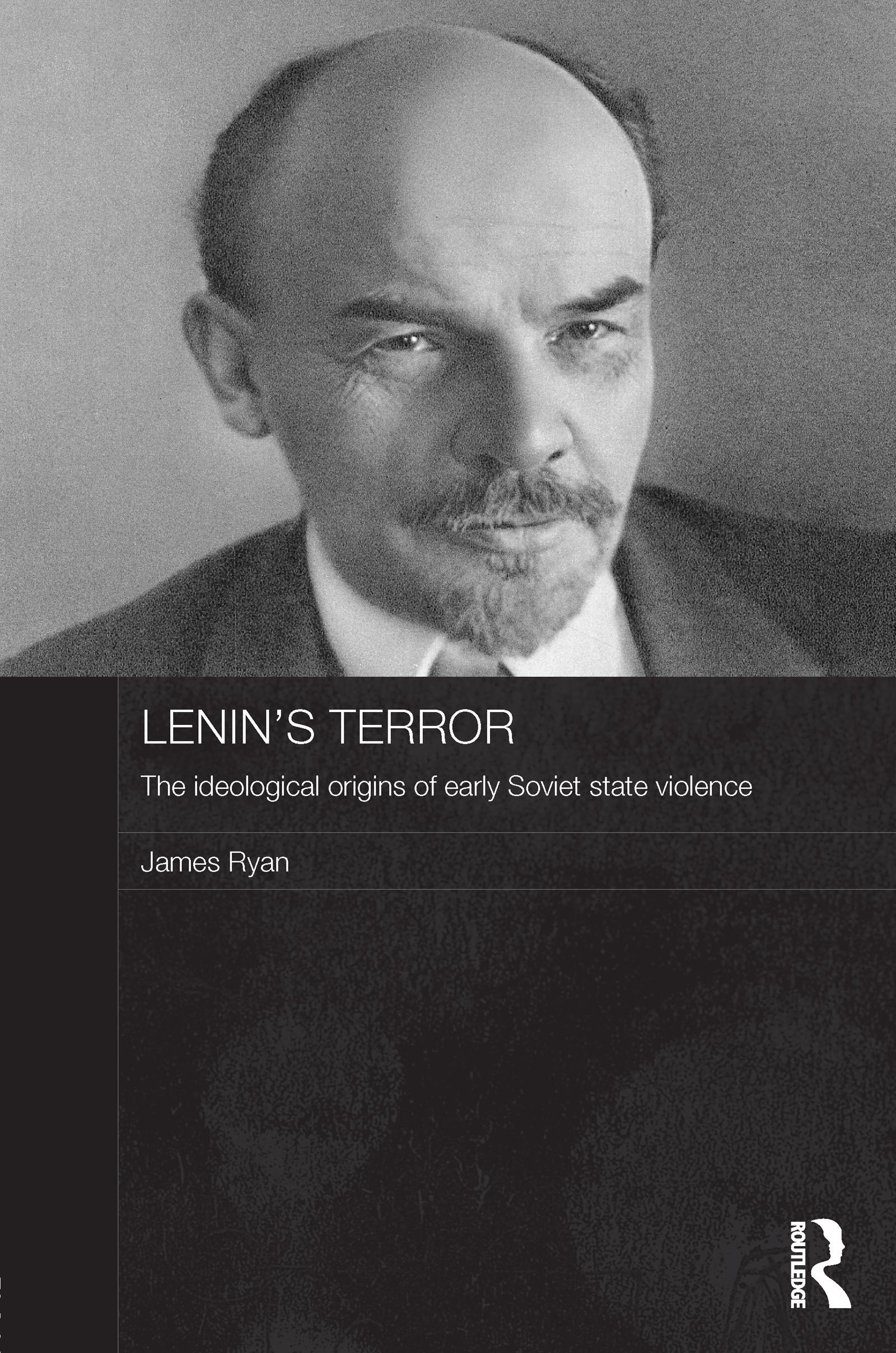
This book explores the development of Lenin’s thinking on violence throughout his career, from the last years of the Tsarist regime in Russia through to the 1920s and the New Economic Policy, and provides an important assessment of the significance of ideological factors for understanding Soviet state violence as directed by the Bolshevik leadership during its first years in power. It highlights the impact of the First World War, in particular its place in Bolshevik discourse as a source of legitimating Soviet state violence after 1917, and explains the evolution of Bolshevik dictatorship over the half decade during which Lenin led the revolutionary state. It examines the militant nature of the Leninist worldview, Lenin’s conception of the revolutionary state, the evolution of his understanding of "dictatorship of the proletariat", and his version of "just war". The book argues that ideology can be considered primarily important for understanding the violent and dictatorial nature of the early Soviet state, at least when focused on the party elite, but it is also clear that ideology cannot be understood in a contextual vacuum. The oppressive nature of Tsarist rule, the bloodiness of the First World War, and the vulnerability of the early Soviet state as it struggled to survive against foreign and domestic opponents were of crucial significance. The book sets Lenin’s thinking on violence within the wider context of a violent world.
Betal nemt med kort, Klarna, Apple Pay eller Google Pay. Ikke tilfreds? Du har altid 14 dages fortrydelsesret. Læs mere i vores vilkår. Har du spørgsmål, så send os en mail på hello@memmo.org.
Memmo gør det nemmere at studere – uanset hvor du er i verden. Hos os samler du dine kursusbøger og smarte studieværktøjer ét sted: resuméer, quizzer, podcasts og flashcards. Og så er der Ted, din studieven, der svarer på alt, du undrer dig over. Over 50 000 studerende studerer allerede her – bygget til at hjælpe dig med at lære hurtigere og stresse mindre.