
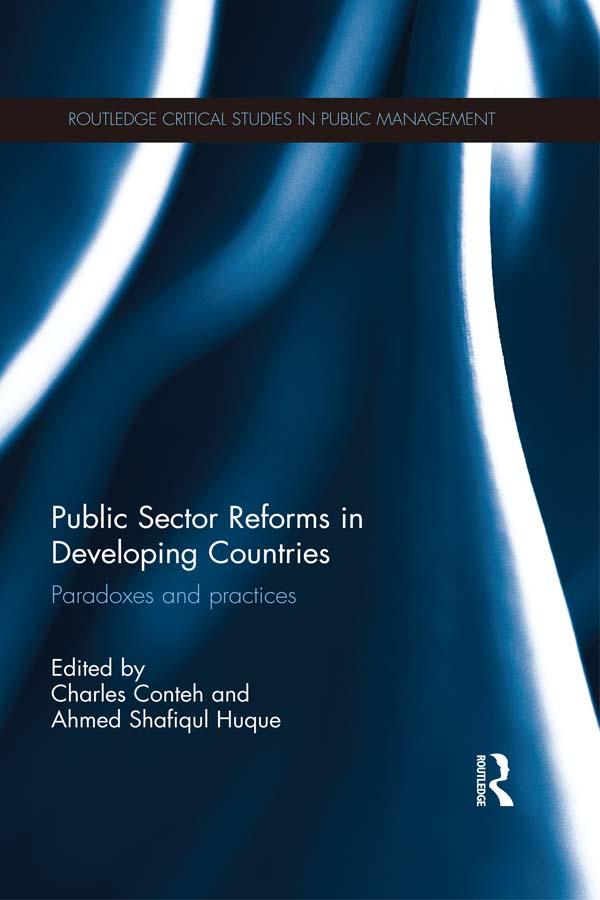
The underpinning assumption of public management in the developing world as a process of planned change is increasingly being recognized as unrealistic. In reality, the practice of development management is characterized by processes of mutual adjustment among individuals, agencies, and interest groups that can constrain behaviour, as well as provide incentives for collaborative action. Paradoxes inevitably emerge in policy network practice and design.
The ability to manage government departments and operations has become less important than the ability to navigate the complex world of interconnected policy implementation processes. Public sector reform policies and programmes, as a consequence, are a study in the complexities of the institutional and environmental context in which these reforms are pursued. Building on theory and practice, this book argues that advancing the theoretical frontlines of development management research and practice can benefit from developing models based on innovation, collaboration and governance.
The themes addressed in Public Sector Reforms in Developing Countries will enable public managers in developing countries cope in uncertain and turbulent environments as they seek optimal fits between their institutional goals and environmental contingencies.
Betal nemt med kort, Klarna, Apple Pay eller Google Pay. Ikke tilfreds? Du har altid 14 dages fortrydelsesret. Læs mere i vores vilkår. Har du spørgsmål, så send os en mail på hello@memmo.org.
Memmo gør det nemmere at studere – uanset hvor du er i verden. Hos os samler du dine kursusbøger og smarte studieværktøjer ét sted: resuméer, quizzer, podcasts og flashcards. Og så er der Ted, din studieven, der svarer på alt, du undrer dig over. Over 50 000 studerende studerer allerede her – bygget til at hjælpe dig med at lære hurtigere og stresse mindre.