
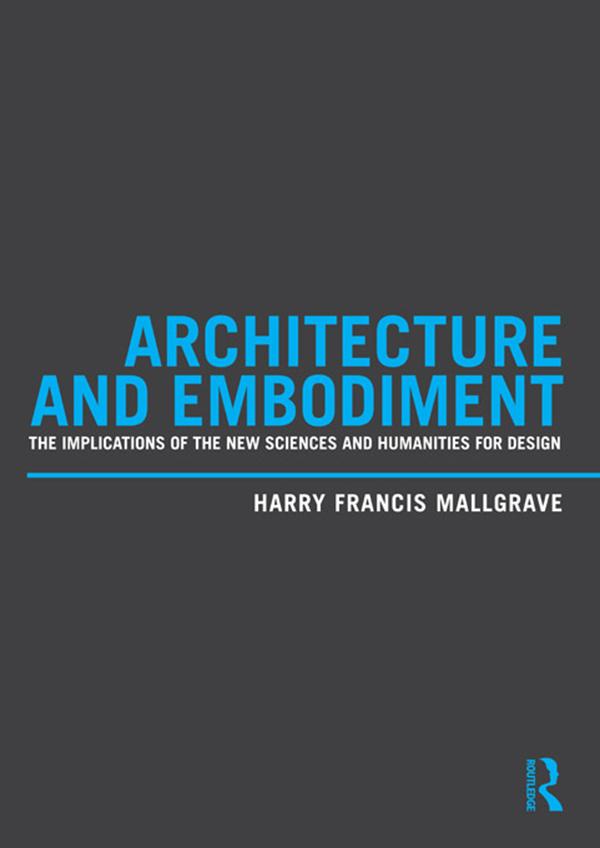
In recent years we have seen a number of dramatic discoveries within the biological and related sciences. Traditional arguments such as "nature versus nurture" are rapidly disappearing because of the realization that just as we are affecting our environments, so too do these altered environments restructure our cognitive abilities and outlooks. If the biological and technological breakthroughs are promising benefits such as extended life expectancies, these same discoveries also have the potential to improve in significant ways the quality of our built environments. This poses a compelling challenge to conventional architectural theory...
This is the first book to consider these new scientific and humanistic models in architectural terms. Constructed as a series of five essays around the themes of beauty, culture, emotion, the experience of architecture, and artistic play, this book draws upon a broad range of discussions taking place in philosophy, psychology, biology, neuroscience, and anthropology, and in doing so questions what implications these discussions hold for architectural design.
Drawing upon a wealth of research, Mallgrave argues that we should turn our focus away from the objectification of architecture (treating design as the creation of objects) and redirect it back to those for whom we design: the people inhabiting our built environments.
Betal nemt med kort, Klarna, Apple Pay eller Google Pay. Ikke tilfreds? Du har altid 14 dages fortrydelsesret. Læs mere i vores vilkår. Har du spørgsmål, så send os en mail på hello@memmo.org.
Memmo gør det nemmere at studere – uanset hvor du er i verden. Hos os samler du dine kursusbøger og smarte studieværktøjer ét sted: resuméer, quizzer, podcasts og flashcards. Og så er der Ted, din studieven, der svarer på alt, du undrer dig over. Over 50 000 studerende studerer allerede her – bygget til at hjælpe dig med at lære hurtigere og stresse mindre.