
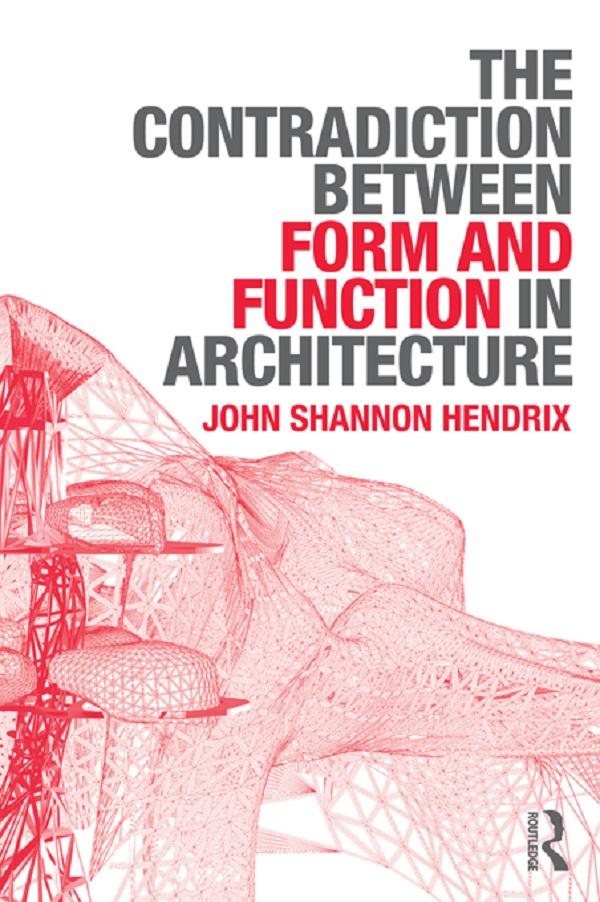
Continuing the themes that have been addressed in The Humanities in Architectural Design and The Cultural Role of Architecture, this book illustrates the important role that a contradiction between form and function plays in compositional strategies in architecture. The contradiction between form and function is seen as a device for poetic expression, for the expression of ideas, in architecture.
Here the role of the terms "form" and "function" are analyzed throughout the history of architecture and architectural theory, from Vitruvius to the present, with particular emphasis on twentieth-century functionalism. Historical examples are given from Ancient, Classical, Islamic, Christian, Byzantine, Gothic, Renaissance, Mannerist, and Neoclassical architecture, and from movements in the twentieth century to the present.
In addition philosophical issues such as lineamenti, Vorstellung, différance, dream construction, deep structure and surface structure, topology theory, self-generation, and immanence are explored in relation to the compositions and writings of architects throughout history.
This book contributes to the project of re-establishing architecture as a humanistic discipline, to re-establish an emphasis on the expression of ideas, and on the ethical role of architecture to engage the intellect of the observer and to represent human identity.
Betal nemt med kort, Klarna, Apple Pay eller Google Pay. Ikke tilfreds? Du har altid 14 dages fortrydelsesret. Læs mere i vores vilkår. Har du spørgsmål, så send os en mail på hello@memmo.org.
Memmo gør det nemmere at studere – uanset hvor du er i verden. Hos os samler du dine kursusbøger og smarte studieværktøjer ét sted: resuméer, quizzer, podcasts og flashcards. Og så er der Ted, din studieven, der svarer på alt, du undrer dig over. Over 50 000 studerende studerer allerede her – bygget til at hjælpe dig med at lære hurtigere og stresse mindre.