
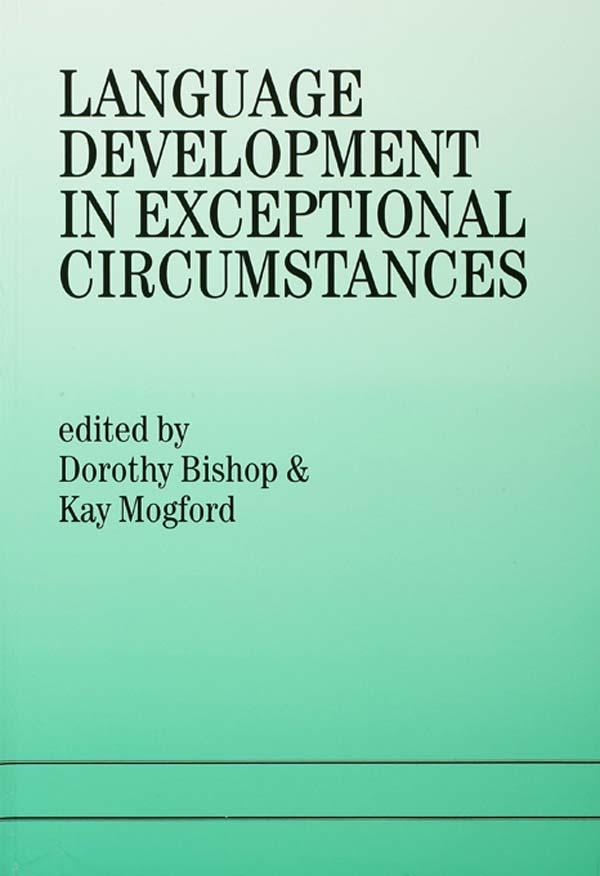
Ever since attempts were made to describe and explain normal language development, references to exceptional circumstances have been made. Variations in the conditions under which language is acquired can be regarded as natural experiments, which would not be feasible or ethical under normal circumstances. This can throw light on such questions as:
*What language input is necessary for the child to learn language?
*What is the relationship between cognition and language?
*How independent are different components of language function?
*Are there critical periods for language development?
*Can we specify necessary and sufficient conditions for language impairment? This book covers a range of exceptional circumstances including: extreme deprivation, twinship, visual and auditory impairments, autism and focal brain damage?
Written in a jargon-free style, and including a glossary of linguistic and medical terminology, the book assumes little specialist knowledge. This text is suitable for both students and practitioners in the fields of psycholinguistics, developmental and educational psychology, speech pathology, paediatrics and special education.
Betal nemt med kort, Klarna, Apple Pay eller Google Pay. Ikke tilfreds? Du har altid 14 dages fortrydelsesret. Læs mere i vores vilkår. Har du spørgsmål, så send os en mail på hello@memmo.org.
Memmo gør det nemmere at studere – uanset hvor du er i verden. Hos os samler du dine kursusbøger og smarte studieværktøjer ét sted: resuméer, quizzer, podcasts og flashcards. Og så er der Ted, din studieven, der svarer på alt, du undrer dig over. Over 50 000 studerende studerer allerede her – bygget til at hjælpe dig med at lære hurtigere og stresse mindre.
Du kan måske også lide
Køb bogen0