
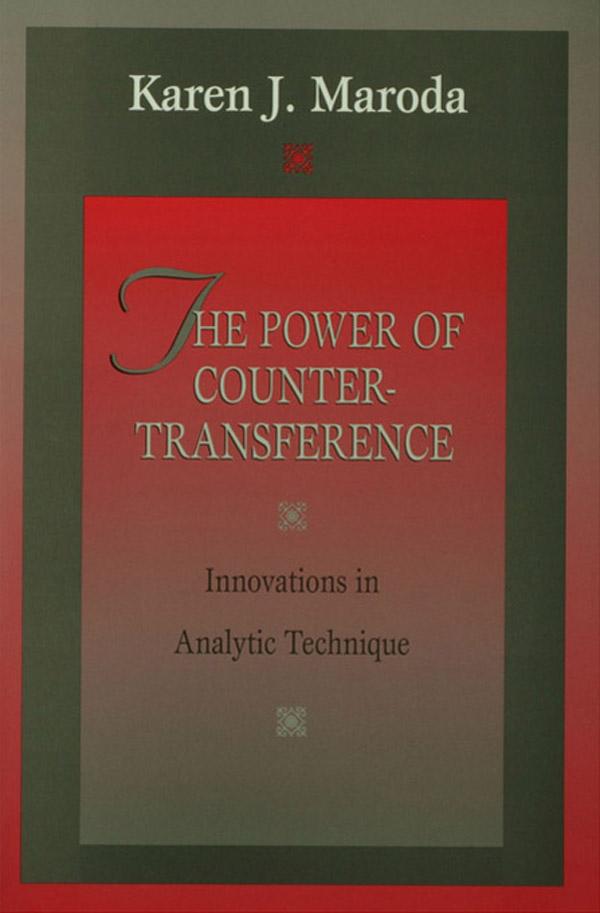
A signpost of the relational turn in contemporary psychoanalysis, Karen Maroda's The Power of Countertransference, published in 1991, is perhaps the first systematic effort to integrate the need for mutual emotional exchanges, which may include the analyst's own self-disclosures, into an interactive model of psychoanalytic practice. Maroda's call for emotional honesty and affective self-disclosure had an immediate impact on the field and led Harold Searles to comment, "If we follow the example set by Maroda, we shall be minimally likely to 'act in' our emotions in our sessions with our patients. They will benefit greatly as a result; we practitioners shall benefit; and the profession of psychoanalysis and psychoanalytic therapy will become healthier and stronger than it is at present." This revised edition includes a new Foreword by Lewis Aron and an Afterword in which Maroda clarifies her own position and comments on the evolution of psychoanalytic technique since the publication of The Power of Countertransference.
Betal nemt med kort, Klarna, Apple Pay eller Google Pay. Ikke tilfreds? Du har altid 14 dages fortrydelsesret. Læs mere i vores vilkår. Har du spørgsmål, så send os en mail på hello@memmo.org.
Memmo gør det nemmere at studere – uanset hvor du er i verden. Hos os samler du dine kursusbøger og smarte studieværktøjer ét sted: resuméer, quizzer, podcasts og flashcards. Og så er der Ted, din studieven, der svarer på alt, du undrer dig over. Over 50 000 studerende studerer allerede her – bygget til at hjælpe dig med at lære hurtigere og stresse mindre.