
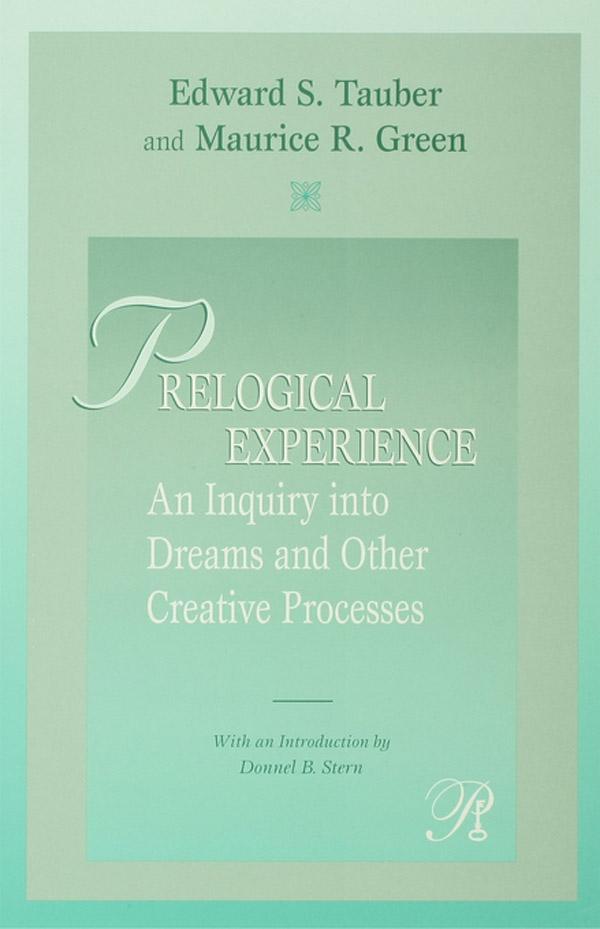
One of the foundational texts of interpersonal psychoanalysis, Prelogical Experience (1959) is a pioneering attempt to elaborate an interpersonal theory of personality that encompasses the nonpropositional, nonverbal dimension of human experience. Prelogical processes, the authors hold, cannot be consigned to infancy; rather they shape experience throughout life and are especially salient in relation to dreams, emotion, perception, and the arts.
Of special note is Tauber and Green's elaboration of the clinical situation that grows out of an appreciation of prelogical experience. In a striking anticipation of contemporary thinking, they approach patient-therapist interaction in terms of the continuous exchange of "presentational data" by patient and analyst. These data enable patient and therapist alike to "know" more about the other than can ever be expressed in propositional terms.
This perspective assigns an important role to what Piaget would term "the cognitive unconscious" in the clinical process. It likewise sustains a view of the countertransference - which includes the analyst's own dreams - as a vital source of presentational data about the patient. As Donnel Stern notes in his Introduction, these and other insights "amount to a surprisingly contemporary description of psychoanalytic treatment."
Betal nemt med kort, Klarna, Apple Pay eller Google Pay. Ikke tilfreds? Du har altid 14 dages fortrydelsesret. Læs mere i vores vilkår. Har du spørgsmål, så send os en mail på hello@memmo.org.
Memmo gør det nemmere at studere – uanset hvor du er i verden. Hos os samler du dine kursusbøger og smarte studieværktøjer ét sted: resuméer, quizzer, podcasts og flashcards. Og så er der Ted, din studieven, der svarer på alt, du undrer dig over. Over 50 000 studerende studerer allerede her – bygget til at hjælpe dig med at lære hurtigere og stresse mindre.