
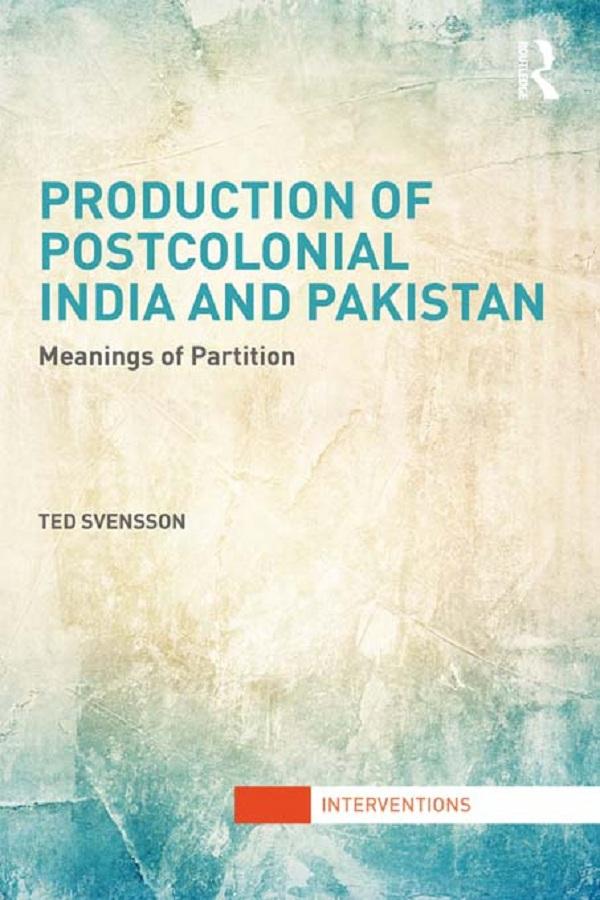
This work seeks to examine the event and concurrent transition that the inauguration of India and Pakistan as ‘postcolonial’ states in August 1947 constituted and effectuated.
Analysing India and Pakistan together in a parallel and mutually dependant reading, and utilizing primary data and archival materials, Svensson offers new insights into the current literature, seeking to conceptualise independence through partition and decolonisation in terms of novelty and as a ‘restarting of time’.
Through his analysis, Svensson demonstrates the constitutive and inexorable entwinement of contingency and restoration, of openness and closure, in the establishment of the postcolonial state. It is maintained that those involved in instituting the new state in a moment devoid of fixity and foundation ‘anchor’ it in preceding beginnings. The work concludes with the proposition that the novelty should not only be regarded as contained in the moment of transition. It should also be seen as contained in the pledge, in the promise and the gesturing towards a future community.
Distinct from most other studies on the partition and independence the book assumes the constitutive moment as the focal point, offering a new approach to the study of partition in British India, decolonisation and the institutional of the postcolonial state. This work will be of great interest to students and scholars of international relations, South Asian studies and political and postcolonial theory.
Betal nemt med kort, Klarna, Apple Pay eller Google Pay. Ikke tilfreds? Du har altid 14 dages fortrydelsesret. Læs mere i vores vilkår. Har du spørgsmål, så send os en mail på hello@memmo.org.
Memmo gør det nemmere at studere – uanset hvor du er i verden. Hos os samler du dine kursusbøger og smarte studieværktøjer ét sted: resuméer, quizzer, podcasts og flashcards. Og så er der Ted, din studieven, der svarer på alt, du undrer dig over. Over 50 000 studerende studerer allerede her – bygget til at hjælpe dig med at lære hurtigere og stresse mindre.